More
    Home Blog Page 4

    How to Buy Crypto on Malcoin: Malcoin Price & Guide 2025

    0
    Malcoin Price

    The world of digital assets is evolving quickly, and one of the names gaining attention is Malcoin Price (MALC). Investors in the United States are increasingly looking for reliable exchanges that provide transparency, security, and ease of use. Malcoin has positioned itself as a modern Malcoin trading platform where users can not only check real-time prices but also learn how to buy, sell, and transfer crypto safely. For newcomers, the Malcoin experience is designed to be simple while maintaining advanced features that experienced traders appreciate.

    As the crypto space grows, having live data and trusted insights becomes essential. With Malcoin, users gain access to updated charts, price history, and tools that support informed cryptocurrency investment decisions. From understanding the Malcoin sign-up process to navigating Malcoin KYC verification, this guide provides everything you need. Whether you want to track performance or explore Malcoin deposit USD options, this article will cover it all.

    What is Malcoin (MALC)?

    Malcoin is a centralized crypto exchange that introduced its native token called MALC. The platform was designed to help traders buy, sell, and swap crypto with low Malcoin fees and limits. U.S. users often ask if it is safe and reliable, and the answer lies in its structure. Malcoin follows AML (Anti-Money Laundering) compliance rules and enforces a strong KYC (Know Your Customer) process to ensure identity verification and protect against fraud.

    The token itself, MALC, is used to reduce Malcoin trading fees, access exclusive rewards, and increase Malcoin liquidity across trading pairs. Just like how Binance Coin (BNB) supports the Binance ecosystem, Malcoin uses MALC to power its ecosystem. This native token also influences Malcoin trading volume, especially when users employ it for fee discounts or special promotions.

    Malcoin Price Chart Today

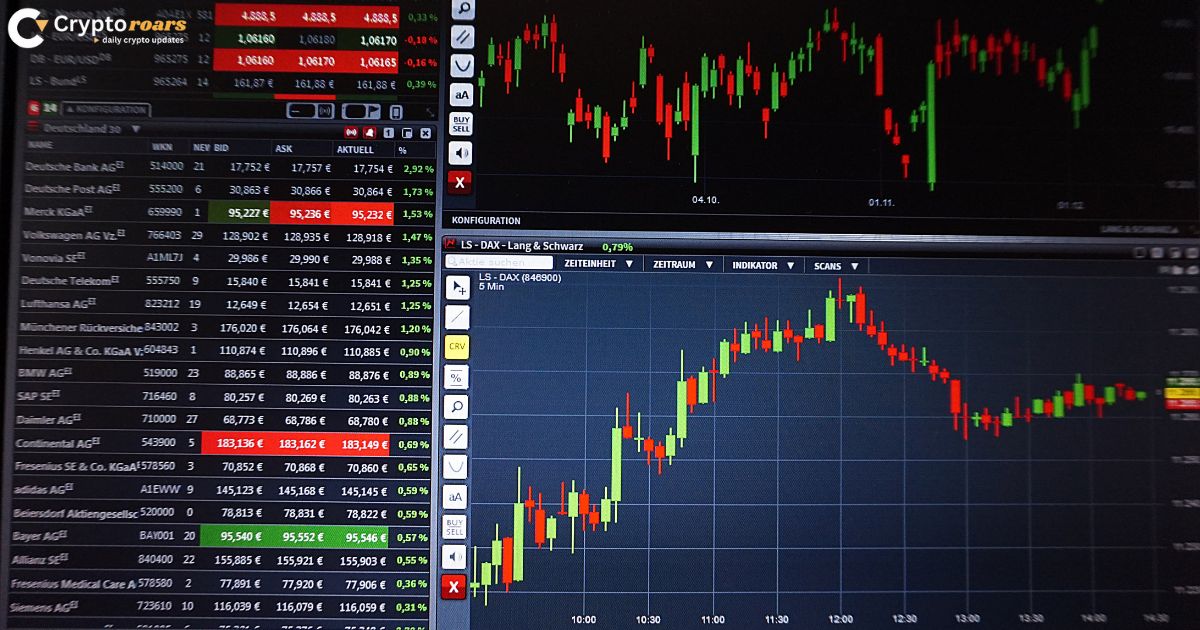
    For traders in the USA, the Malcoin Price (MALC) is often viewed about the USD to crypto conversion. A live chart shows the price movement of MALC against the Bitcoin (BTC) price on Malcoin, Ethereum (ETH) purchase, and other altcoins like Cardano (ADA).

    Below is an example of what a daily chart might include:

    Date MALC Price (USD) 24h Change Trading Volume (USD)
    Aug 18, 2025 $0.82 +3.5% $12,450,000
    Aug 19, 2025 $0.85 +4.1% $13,200,000
    Aug 20, 2025 $0.79 -7.0% $11,500,000

    These fluctuations matter because they give insight into the Malcoin market orders vs limit orders, and whether you should apply dollar-cost averaging (DCA) or trade in short bursts.

    Malcoin Price History & Key Milestones
     Malcoin Price

    The story of the Malcoin Price (MALC) is a journey of resilience. From its launch, the coin started trading at a few cents before gradually picking up traction. The first big spike came when the Malcoin trading platform listed MALC alongside popular tokens such as Ethereum (ETH) purchase and Bitcoin (BTC) price on Malcoin.

    Another major milestone was when Malcoin reached partnerships with U.S.-based payment processors. This allowed bank transfer, ACH / wire deposit, and even debit card crypto purchase, making it easier for American investors to deposit money. These events boosted both Malcoin liquidity and Malcoin trading volume, leading to a more sustainable price growth.

    All-Time High (ATH) and All-Time Low (ATL) of Malcoin

    Every coin has its highs and lows. The all-time high (ATH) for Malcoin Price (MALC) was recorded at $3.12 in early 2023, driven by hype in the altcoin season. Meanwhile, its all-time low (ATL) touched just $0.04 in late 2021, when the project was still under development and had limited users.

    These extreme points remind investors of the golden rule of cryptocurrency investment: markets are volatile. The swings between ATH and ATL are reminders that smart trading strategies (limit order, market order) and careful planning, such as dollar-cost averaging (DCA), are essential.

    Malcoin Key Metrics & Market Performance

    Here are some of the core stats about Malcoin:

    Metric Value (2025) Notes
    Circulating Supply 750,000,000 MALC 80% of the total supply
    Total Supply 1,000,000,000 MALC Fixed cap
    Market Cap $637,500,000 Mid-tier market ranking
    Daily Malcoin trading volume $11.5M Increasing steadily

    These numbers reflect how Malcoin liquidity is improving and how more investors are considering MALC as a tool for diversification. The fact that Malcoin supports Malcoin buys Bitcoin, Malcoin buys Ethereum, and even Malcoin altcoins trading makes it attractive as an exchange coin.

    Malcoin Technical Analysis & Future Outlook

    Technical analysis for Malcoin shows that moving averages and relative strength indexes have identified zones of support around the $0.70 level and resistance around $0.90. Traders often look at Malcoin trading volume and Malcoin liquidity as signs of strength, especially when price tests these levels.

    For the future, analysts predict that if Malcoin exchange continues to grow in the U.S. with improved Malcoin security features like two-factor authentication (2FA) and insurance on crypto exchanges, the Malcoin Price (MALC) could break new highs. Long-term growth also depends on the adoption of Malcoin-supported coins and the expansion of its U.S. services.

    Malcoin Global Prices & Exchange Listings

    One reason why U.S. traders ask how to buy crypto on Malcoin is its global presence. Malcoin is listed on multiple platforms, with small price variations across regions.

    For example:

    Exchange MALC Price Liquidity Score Supported Pairs
    Malcoin Exchange (USA) $0.82 High MALC/USD, MALC/BTC, MALC/ETH
    WEEX $0.81 Medium MALC/USDT, MALC/ETH
    Regional Exchanges $0.79–0.83 Low Limited pairs

    These small variations are often caused by blockchain transaction fees and differences in Malcoin withdrawal fees.

    MALC to USD Converter & Profit Calculator

    For U.S. users, converting MALC to dollars is easy with a live calculator. If you bought 5,000 MALC at $0.50 and the current Malcoin Price (MALC) is $0.82, then your profit would look like this:

    Investment Buy Price Current Price Profit/Loss
    5,000 MALC $0.50 $0.82 $1,600 profit

    This simple tool helps U.S. investors measure their gains when they use strategies such as dollar-cost averaging (DCA).

    How to Buy Malcoin (Step-by-Step Guide)

     Malcoin Price

    Buying crypto on Malcoin in the United States is simple if you follow the steps carefully. First, complete the Malcoin sign-up process by creating an account on the Malcoin trading platform. After that, pass the Malcoin KYC verification, which follows U.S. AML (Anti-Money Laundering) compliance standards.

    Next, Malcoin deposits USD through bank transfer, ACH / wire deposit, or a debit card crypto purchase. Once funds are available, select MALC under supported coins and place either a market order or a limit order. Finally, confirm your purchase and transfer your MALC tokens into a safe wallet. Many U.S. investors use a Malcoin hardware wallet or Malcoin software wallet for added safety.

    Why Choose Malcoin Exchange?

    Malcoin is not just about the token. The Malcoin trading platform has low Malcoin withdrawal fees, offers Malcoin-supported coins, and includes strong Malcoin security features such as two-factor authentication (2FA). For many U.S. users, one of the biggest advantages is that Malcoin provides insurance on crypto exchanges, which is rare for mid-tier platforms.

    The exchange also highlights the importance of the “not your keys, not your coins” principle by promoting safe withdrawals to wallets. U.S. users often compare it with Coinbase or Kraken and find Malcoin competitive in terms of Malcoin fees and limits.

    Malcoin on WEEX and Other Platforms

    While Malcoin itself is the main centralized crypto exchange, MALC is also available on WEEX. For American users, WEEX can serve as an alternative, although liquidity is sometimes lower. Both platforms allow Ethereum (ETH) purchase, Bitcoin (BTC) price on Malcoin, and trading of altcoins like Cardano (ADA).

    The choice between exchanges often depends on Malcoin account security, crypto withdrawal address confirmations, and whether Malcoin cold storage practices are followed.

    Similar Coins & Alternatives to Malcoin

    If you are looking for coins similar to MALC, you might consider alternatives such as BNB, OKB, or Cronos (CRO). These coins also serve their centralized crypto exchange ecosystems. Just like Malcoin, their value depends heavily on trading volume, liquidity, and user adoption.

    Still, MALC has an edge in offering more transparent Malcoin fees and limits, as well as a stronger emphasis on Malcoin security features.

    Social Media, Community & Official Links

    A strong community supports Malcoin’s growth. The platform is active on Twitter, Reddit, and Telegram, where U.S. investors often discuss trading strategies (limit order, market order), crypto wallet seed phrase safety, and how to avoid phishing & scams in crypto.

    The official website provides direct access to the Malcoin sign-up process, announcements, and updates on Malcoin liquidity or new Malcoin-supported coins listings.

    Final Thoughts on Malcoin Price & Investment Potential

    The Malcoin Price (MALC) shows promise for U.S. investors looking to diversify their portfolios. Its steady growth, active Malcoin trading platform, and support for Malcoin-supported coins make it an attractive option. However, risks remain, as with any cryptocurrency investment, due to volatility and regulatory uncertainty in the United States.

    By understanding how Malcoin exchange works, following safe storage practices like the “not your keys, not your coins” principle, and keeping an eye on Malcoin liquidity and Malcoin trading volume, you can trade smarter. Whether you use dollar-cost averaging (DCA) or active trading strategies (limit order, market order), Malcoin offers opportunities for both beginners and experienced traders.


    Frequently Asked Questions (FAQ)

    What is the current price of Malcoin (MALC) in USD?

    As of today, the Malcoin Price (MALC) is trading at around $0.82 against the dollar.

    2. Where can I buy Malcoin in the USA?

    You can buy MALC directly on the Malcoin exchange or platforms like WEEX.

    3. Is Malcoin safe for U.S. investors?

    Yes. It uses two-factor authentication (2FA), cold storage vs hot wallet practices, and insurance on crypto exchanges.

    4. What are the Malcoin withdrawal fees?

    Fees vary but are usually lower than most U.S. platforms.

    5. Can I store Malcoin in external wallets?

    Yes. Both the Malcoin hardware wallet and Malcoin software wallet options are supported.

    6. How does Malcoin compare to Ethereum or Bitcoin?

    Malcoin is a utility token linked to an exchange, while Ethereum (ETH) purchase and Bitcoin (BTC) price on Malcoin are global assets.

    For more information, keep visiting cryptoroars.com
    Bitcoin Price Prediction 2025: Will BTC Reach $200K?

    0
    Bitcoin Price Prediction 2025

    The world of Bitcoin (BTC) never fails to spark curiosity, especially when investors try to look ahead and forecast its next big move. With 2025 approaching quickly, many traders, analysts, and institutions are debating where the price of Bitcoin could go next. The main question echoing across the crypto market is whether this digital asset can finally break into six figures and possibly test or surpass the much-anticipated $200,000 mark. When we discuss Bitcoin Price Prediction 2025, it’s not just about numbers, but about understanding the larger economic, technological, and psychological forces shaping its future.

    Over the years, Bitcoin has moved from being a niche experiment to a global store of value that challenges traditional financial systems. Its price journey has been marked by dramatic rallies, painful corrections, and remarkable recoveries. By studying market signals, institutional buyers / ETFs, and past halving cycles, we gain insights into what lies ahead for Bitcoin in 2025.

    Current Bitcoin Price and Market Overview

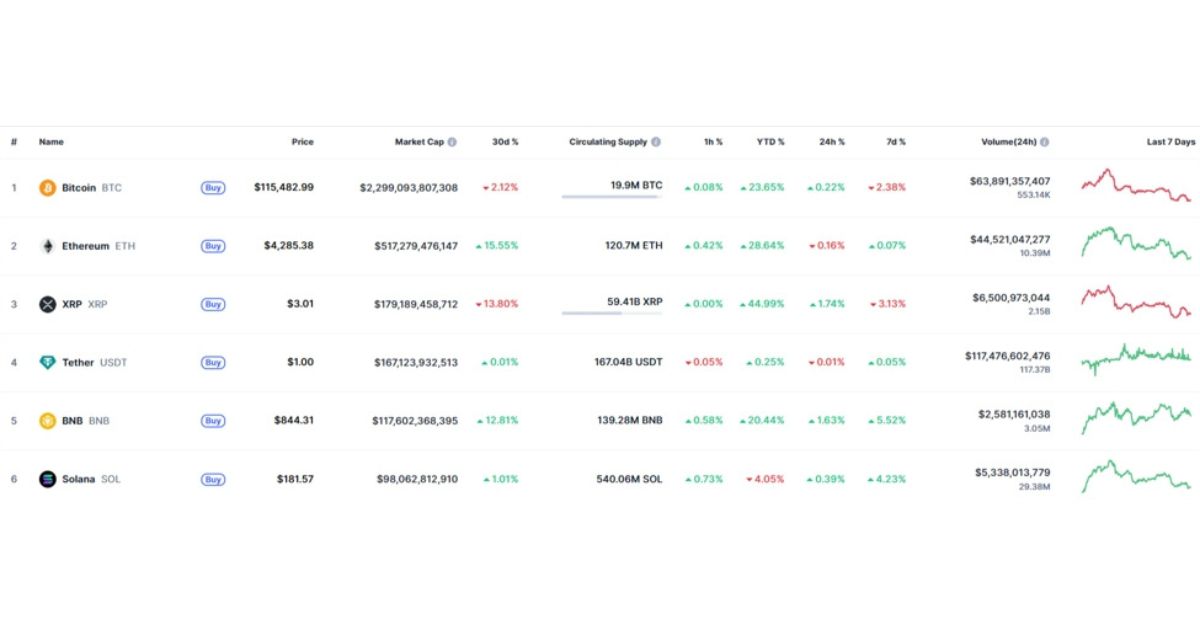
    At the start of 2025, BTC was trading at $115,000 has created both optimism and caution among traders. This level is far higher than previous cycles but still short of a new Bitcoin all-time high $124,000 that was reached earlier in the year. Many investors saw that surge as the start of a massive breakout, but the BTC rally stalls each time the price nears the Bitcoin resistance at $120–$124K range.

    The total crypto market cap remains above $3 trillion, showing strong interest from US retail and institutional investors. However, trading volumes on major exchanges reveal that profit-taking pressure is strong, especially when sudden corrections trigger massive liquidations in futures markets. Data from CoinGlass liquidation tracker confirms that more than $500 million was wiped out in a single day when the market fell below $118,000, showing how overleveraged positions continue to affect short-term moves.

    Why Is Bitcoin Price Volatile in 2025?

    Bitcoin Price Prediction 2025

    Bitcoin has always been volatile, but in 2025, this volatility is amplified by macroeconomic events. The influence of Jerome Powell and his statements at the Jackson Hole meeting about inflation and interest rates directly impacted Bitcoin. In his Jackson Hole speech in 2024, Powell hinted at longer-lasting, higher rates, triggering a risk assets sell-off that spilled into Bitcoin markets.

    Analysts note that inflation and Bitcoin are more connected than ever. Rising costs in the USA push investors to view Bitcoin as a hedge, but when the Federal Reserve increases rates, traders shift back to safer assets like US bonds. This creates a push-and-pull effect on Bitcoin’s price. The Nasdaq correlation with crypto remains strong, with both markets rising and falling in tandem.

    Profit-Taking and Liquidations: Are Bulls Losing Steam?

    The year has seen many traders locking in profits after Bitcoin’s quick rise above $110,000. This wave of selling has created profit-taking pressure, reducing momentum for further growth. Analysts warn that without new inflows, Bitcoin might remain stuck under its resistance zone.

    On-chain Glassnode data shows that whale accumulation of BTC continues quietly during dips, even while retail traders exit. However, crypto leverage reset events triggered by cascading massive liquidations leave the market vulnerable. When overleveraged positions are wiped out, Bitcoin temporarily loses strength, leading to speculation about whether bulls are losing steam in this rally.

    Impact of Federal Reserve Policies and Inflation on Bitcoin

    The role of the Federal Reserve / Fed is critical in shaping the Bitcoin price prediction 2025. Every employment data & inflation report shifts the outlook for monetary policy. When inflation in the USA is sticky, the Fed signals higher rates, which brings stress to Bitcoin because it is seen as a risk asset.

    The interest rates’ impact on crypto cannot be ignored. As bonds yield more, some institutional investors move out of Bitcoin. But the counterpoint is that persistent inflation keeps Bitcoin attractive as a hedge. This dual narrative is why each Jackson Hole meeting and every Jerome Powell comment swings Bitcoin by thousands of dollars in hours.

    Bitcoin Halving 2024 Effect: How It Shapes 2025 Prices

    The Bitcoin halving in 2024 was one of the most important events in shaping supply dynamics. This event cut block rewards by half, making Bitcoin scarcer than before. Historically, each halving led to a surge the following year, and 2025 is no exception.

    According to the PlanB stock-to-flow model, reduced supply after halvings combined with steady demand should push Bitcoin higher. Many traders believe this is why Bitcoin was able to climb toward $124,000. Whether the halving effect continues throughout 2025 remains to be seen, but supply crunches have historically created price spikes.

    Institutional Adoption, ETFs, and Corporate Treasury Strategies

    One of the most powerful drivers for Bitcoin price prediction 2025 is the growth of institutional demand for BTC. The launch of ETF inflows in the USA allowed retirement funds and hedge funds to easily gain exposure. Data shows billions of dollars entering through Bitcoin ETFs every month.

    Companies also play a role. The corporate treasury Bitcoin strategy led by MicroStrategy Bitcoin holdings and Michael Saylor continues to inspire others. US firms like Tesla and even smaller tech companies view Bitcoin as a hedge against fiat. These moves legitimize Bitcoin’s role as a store of value and add steady buying pressure.

    Technical Analysis: Key Support and Resistance Levels for BTC

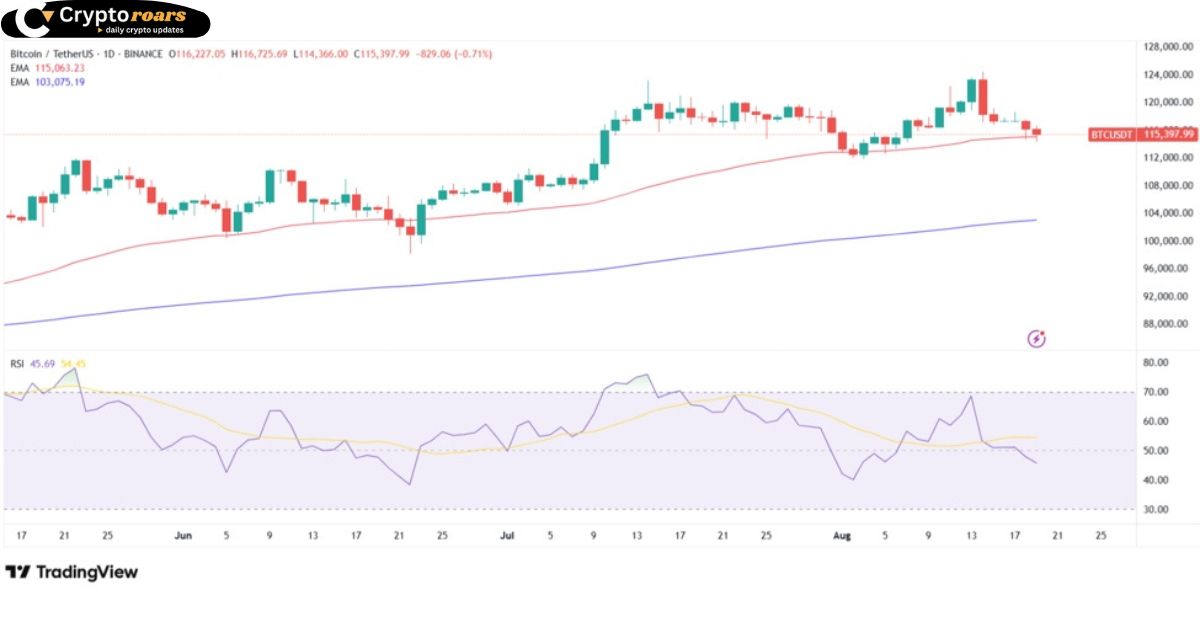
    Chart watchers point to major technical levels for Bitcoin price prediction 2025. Analysts using TradingView RSI charts note that Bitcoin often enters the oversold RSI zone after sudden corrections, signaling buying opportunities.

    The 50 EMA / 200 EMA support remains a key guide for traders. If Bitcoin holds above these moving averages, momentum continues upward. The use of Fibonacci retracement levels also points to support zones near $105,000 and resistance around $120K–$124K. Table data shows where Bitcoin buyers and sellers cluster.

    Indicator Support / Resistance Zone Analysis Outcome
    50 EMA / 200 EMA support $108,000 – $110,000 Strong support levels
    Bitcoin resistance at $120K–$124K $120,000 – $124,000 Heavy selling pressure
    Oversold RSI zone Below 30 RSI Signals buying interest

    Bitcoin Price Predictions 2025: Experts and Banks’ Forecasts

    Wall Street remains divided on the Bitcoin price prediction for 2025. Analysts at JPMorgan Chase expect Bitcoin to trade between $100,000–$150,000, citing profit-taking pressure and possible risk assets sell-off if rates stay high. Meanwhile, Goldman Sachs believes a breakout toward $180,000 is possible if ETF inflows remain strong.

    On the bullish side, Cathie Wood and ARK Invest maintain their bold prediction of $200,000+ by the end of 2025. Tom Lee (Fundstrat) also expects Bitcoin to outperform traditional assets. The wide range of forecasts shows how uncertain the path remains.

    Bitcoin vs Altcoins: Ethereum, XRP, and Solana Market Signals

    Bitcoin Price Prediction 2025

    Altcoins provide important signals for Bitcoin’s future. Ethereum (ETH) has seen strong inflows, with Ethereum surging toward $4,600, showing that capital rotation continues. XRP gained attention after regulatory clarity in the USA, while Solana (SOL) remains a fast-growing blockchain ecosystem.

    When Bitcoin dominance drops, it often signals that altcoins are gaining strength. While Bitcoin (BTC) remains the leader, the behavior of XRP and Solana signals helps traders gauge overall sentiment in the crypto sector.

    Risks and Challenges Facing Bitcoin Investors in 2025

    Investors face several risks despite optimism around the Bitcoin price prediction 2025. Cybersecurity threats, exchange hacks, and fraud remain issues that regulators in the USA continue to warn about.

    Another major challenge is extreme volatility. The combination of crypto leverage reset, sudden massive liquidations, and market psychology (fear/greed) makes Bitcoin risky for newcomers. Experts like Alex Krüger economist, warn that volatility can test even experienced investors.

    Global Regulations and Their Effect on BTC Price

    The USA plays a leading role in regulating Bitcoin. The SEC has increased oversight of exchanges and ETFs, ensuring that investor protections are strong. This regulatory clarity boosted confidence among US-based institutions.

    Globally, countries in Europe and Asia are introducing their own crypto rules. These regulations create both opportunities and risks. Stricter laws may reduce fraud, but heavy restrictions could slow growth. The final effect on Bitcoin price prediction 2025 will depend on how the rules balance innovation with protection.

    Long-Term Bitcoin Forecast 2026–2030: Where Could BTC Go Next?

    Looking beyond 2025, experts suggest that Bitcoin could reach between $500,000 and $1 million by 2030 if adoption continues. Supporters like Michael Saylor and Cathie Wood argue that Bitcoin will cement itself as a store of value like gold.

    Models such as the PlanB stock-to-flow model also suggest that scarcity will drive Bitcoin higher over the long term. If demand from institutional buyers / ETFs keeps growing, the future looks even stronger.

    Investor Sentiment: Fear, Greed, and Market Psychology

    Crypto market psychology (fear/greed) plays a huge role in 2025. The Santiment analytics and Market Value to Realized Value (MVRV) ratio are popular tools to measure sentiment. When greed dominates, Bitcoin often overheats and corrects. When fear takes over, Bitcoin finds a bottom.

    This emotional cycle repeats across every bull run. Understanding sentiment through tools like the TradingView RSI charts helps investors decide whether to enter or exit positions. Sentiment in the USA remains cautiously optimistic, though profit-taking remains a risk.

    What Happens Next? Bitcoin price prediction 2025

    The bullish scenario for Bitcoin price prediction 2025 sees Bitcoin smashing through Bitcoin resistance at $120K–$124K and moving toward $200,000. This would require strong ETF inflows, more corporate treasury Bitcoin strategy moves, and a supportive macro environment.

    The bearish scenario expects risk assets sell off if the Fed raises rates too aggressively. This could push Bitcoin back to $90,000. A neutral scenario suggests consolidation between $110,000 and $140,000 while markets wait for new catalysts.

    FAQs – Bitcoin price prediction 2025

    Can Bitcoin hit $200K in 2025?

    Yes, it is possible if institutional demand for BTC and ETF inflows remains strong, but it depends on macroeconomic conditions.

    Is it safe to invest in Bitcoin now?

    Bitcoin is volatile and influenced by Jerome Powell and Federal Reserve decisions, so risk management is crucial.

    What is the role of ETFs in Bitcoin’s growth?

    ETFs in the USA allow pension funds and hedge funds to gain exposure, creating steady buying pressure.

    Will altcoins outperform Bitcoin in 2025?

    Ethereum (ETH), XRP, and Solana (SOL) may outperform in short cycles, but Bitcoin dominance keeps BTC the leader.

    How do regulations affect Bitcoin investors in the USA?

    SEC oversight and clearer laws have made the market safer, but heavy restrictions could reduce flexibility for traders.

    For more information, keep visiting cryptoroars.com
    Crypto Investment Consulting: Why Every Investor Needs Expert Guidance

    0
    Crypto Investment Consulting

    Introduction to Crypto Investment Consulting

    Crypto Investment Consulting

    The cryptocurrency world is moving at lightning speed, and for many investors, keeping up with this dynamic market can feel confusing. With new projects launching daily, evolving blockchain protocols, and strict regulatory compliance standards, it’s difficult to know which path leads to long-term success. This is why Crypto Investment Consulting has become so valuable. Instead of leaving decisions to chance, investors can rely on expert consultants who understand market shifts, identify real opportunities, and minimize unnecessary risks.

    A consultant does far more than give surface-level advice. They provide deep guidance on everything from tokenomics design and smart contract security to strategies involving blockchain governance and portfolio diversification strategies. While casual investors may depend on hype or rumors, professionals with access to expert consulting gain tailored insights that help them invest smarter. In a fast-changing market, the right guidance can mean the difference between losses and lasting growth.

    Understanding the Role of a Crypto Consultant

    The role of a crypto investment advisor or consultant is not just to recommend coins. They examine the investor’s goals, income, and risk tolerance, and then create portfolio diversification strategies designed to last. Unlike random tips found on social media, this professional support is based on security audits for smart contracts, regulatory knowledge, and real-world financial planning.

    A good consultant also bridges technical and financial knowledge. They may guide clients on smart contract security, help startups with NFT marketplace development, or design staking and governance models for long-term yield. This makes them more than advisors. They become connectors between traditional finance and Web3 venture consulting. Through careful analysis, consultants protect clients from mistakes while helping them benefit from early opportunities like early-stage token investments or token bridges.

    Key Benefits of Hiring a Crypto Consultant

    One of the biggest advantages of Crypto Investment Consulting is risk control. The market is full of volatility, scams, and misleading promotions. With an expert, investors gain access to proven ROI modeling in crypto mining, realistic timelines, and better crypto portfolio management. These strategies save both time and money.

    Another benefit is compliance. The USA has strict rules for trading, taxation, and disclosure. A consultant ensures compliance and KYC/AML standards are met, which reduces the chance of penalties. They also explain jurisdictional risk mitigation, ensuring investments are legal across different states or global markets. Ultimately, consulting provides peace of mind, letting investors focus on growth instead of fear.

    Types of Crypto Consulting Services Available

    The world of consulting in crypto is broad. Some professionals focus on crypto development consulting, where they design systems for token launches or guide on blockchain infrastructure setup. Others specialize in mining profitability analysis, where they compare ASIC vs GPU rigs, calculate costs, and suggest energy optimization in mining for better returns.

    Some consultants specialize in liquidity mining, exchange listings, or DAO governance transition. Businesses often need blockchain governance strategies to attract investors and manage communities. Meanwhile, individual investors may want advice on token utility and vesting schedules to avoid scams. Every service, whether it is DeFi lending platform design or hardware logistics (ASICs, GPUs) planning, adds unique value to investors.

    How to Choose the Right Crypto Consultant

    Choosing the right consultant is as important as the investment itself. Investors should look for proven track records, knowledge of Layer 1 vs Layer 2 scaling, and a strong understanding of regulatory frameworks in crypto. A consultant who understands blockchain infrastructure and provides security audits for smart contracts offers greater trust.

    It is also wise to choose someone connected to industry leaders like Blockchain App Factory (entity/brand). Such firms have global reach and experience in building NFT marketplace development or tokenized real-world assets (RWA). Investors should also ask for case studies or client testimonials. Real results matter more than promises.

    Questions Every Investor Should Ask a Consultant

    Before hiring, investors should ask: “How do you manage crypto portfolio management and portfolio diversification strategies?” This shows if they have a structured approach. They should also ask, “What is your experience with exchange listings or tokenomics design?” Strong consultants will have clear answers supported by examples.

    Another important question is about fees. Investors should ask, “Do you charge based on results or time?” Transparency matters. Finally, ask, “What is your approach to regulatory compliance and jurisdictional risk mitigation?” Since the USA has complex rules, a consultant who understands them is more reliable.

    The Role of Crypto Financial Advisors vs Consultants

    Crypto Investment Consulting

    Many confuse financial advisors with consultants. A crypto investment advisor focuses mainly on financial planning, tax strategy, and wealth management. Their work is about balancing crypto with traditional assets like stocks and bonds. Consultants, on the other hand, go deeper into technical areas like token bridges, blockchain governance, or staking and governance systems.

    Both roles are valuable. Sometimes, investors need both. For example, a financial advisor might guide on retirement planning, while a consultant designs a token utility and vesting schedules plan for early investments. Together, they provide a full view that combines traditional wealth management with next-generation crypto opportunities.

    Red Flags to Avoid When Hiring a Crypto Consultant

    Not every consultant is genuine. If someone guarantees profit, walk away immediately. The crypto market is unpredictable, and no one can promise gains. Another red flag is poor knowledge of regulatory frameworks in crypto or compliance and KYC/AML rules. Without these, investors face fines or lawsuits.

    Hidden fees are another danger. Some so-called consultants push services without explaining costs. Others ignore technical issues like security audits for smart contracts or hardware logistics (ASICs, GPUs), which can harm investors in the long run. True experts are transparent, knowledgeable, and realistic.

    Real-World Examples of Successful Crypto Consulting

    In one case, an investor in Texas worked with a consultant who guided him through mining profitability analysis. The consultant compared ASIC vs GPU rigs, optimized energy optimization in mining, and helped him double returns in under two years. Another example comes from a startup that wanted to launch an NFT project. With consulting from Blockchain App Factory (entity/brand), they built a secure NFT marketplace development platform that attracted thousands of users.

    A third case involves compliance. A US-based DeFi startup faced challenges with regulatory compliance. Through crypto development consulting, the consultant guided them on DAO governance transition, tokenomics design, and safe exchange listings. This allowed them to raise millions while staying within the law. These stories show how Crypto Investment Consulting creates real value.

    Future of Crypto Consulting in 2025 and Beyond

    The future of Crypto Investment Consulting will expand as markets mature. AI tools will provide faster mining profitability analysis, automated staking and governance insights, and smarter crypto portfolio management. Consultants will become interpreters of AI data, helping investors apply it in real life.

    At the same time, global rules will evolve. The USA is expected to tighten regulatory frameworks in crypto, making regulatory compliance consulting more important. The rise of Web3 venture consulting, tokenized real-world assets (RWA), and proof-of-stake transition (Ethereum example) shows that consulting will only grow in value. Investors who use expert help will stay ahead.


    📊 Table: Comparison Between Financial Advisors and Crypto Consultants

    Feature Crypto Financial Advisor Crypto Consultant
    Focus Wealth planning, taxes, compliance Technical, strategic, blockchain-focused
    Services Asset allocation, retirement planning Tokenomics design, staking and governance, NFT marketplace development
    Best For Long-term wealth building Market entry, startups, technical strategies


    Conclusion: Why Expert Guidance Is Essential for Every Investor

    In the end, Crypto Investment Consulting is not a luxury but a necessity. The market is filled with risks, scams, and technical complexities. Without guidance, investors may lose money or miss out on promising opportunities like early-stage token investments or liquidity mining strategies.

    With the right cryptocurrency consultant, investors gain clear roadmaps, safer portfolios, and confidence in every decision. Whether through crypto development consulting, Web3 venture consulting, or deep crypto portfolio management, expert guidance is the key to lasting success. The US crypto landscape is moving fast, and only those who embrace crypto investment consulting will thrive in 2025 and beyond.

    FAQs on Crypto Investment Consulting

    Q1: What is Crypto Investment Consulting?

    It’s expert guidance in the cryptocurrency ecosystem that helps investors manage risks, follow regulatory compliance, and find opportunities like staking and governance, or liquidity mining.

    Q2: How is a consultant different from a crypto advisor?

    A crypto consultant focuses on areas like smart contract security, exchange listings, and tokenomics design, while a crypto investment advisor mainly works on portfolio diversification strategies and financial planning.

    Q3: Can consultants help with mining?

    Yes. A crypto mining consultant helps with ASIC vs GPU rigs, mining profitability analysis, and energy optimization in mining to improve ROI.

    Q4: Do consultants guide on regulations?

    Yes. They handle compliance and KYC/AML, explain regulatory frameworks in crypto, and help with jurisdictional risk mitigation for safe investing.

    Q5: Is consulting useful for beginners?

    Absolutely. Beginners benefit from crypto portfolio management, early-stage token investments, and avoiding scams with professional support.

    For more information, keep visiting cryptoroars.com
    XRP 2017 Rally Signal Returns in 2025: Will History Repeat with a Massive Price Surge?

    0
    XRP 2017 Rally Signal

    XRP 2017 Rally Signal Returns: Is History About to Repeat in 2025?

    The XRP 2017 Rally Signal is remembered as one of the most powerful triggers in crypto history. In 2017, it sparked a legendary XRP bull run that transformed the token from an overlooked digital asset into a global talking point. Prices skyrocketed within months, driven by momentum that few expected, and the 2017 rally pattern became a benchmark for traders studying explosive growth cycles in digital currencies. That rally didn’t just change XRP’s place in the market—it also reshaped how analysts view signals that precede historic surges.

    Today, with new tools in crypto technical analysis and advanced chart-reading strategies, experts are asking the same question: could the market be setting up for another symmetrical triangle breakout that mirrors the past? As 2025 approaches, excitement builds around whether the XRP 2017 Rally Signal might return, hinting at another major price surge and reminding everyone that in crypto, history often finds a way to rhyme.

    A Quick Look Back at XRP’s Legendary 2017 Bull Run

    Back in 2017, the cryptocurrency market was still young, with Bitcoin (BTC) acting as the guiding light for altcoins. During that time, XRP became one of the most explosive performers, rising from below $0.01 to over $3.5 at its peak. This move was not just about speculation. It was powered by narratives around banking adoption, cross-border payments, and speculation that banks would use Ripple’s technology for settlement.

    The 2017 rally gave XRP a special place in the crypto world. The surge was fueled by a multi-year squeeze that broke out through a symmetrical triangle breakout, a classic sign of strength in crypto technical analysis. The effect was massive and led to what many call one of the most parabolic rises in crypto history. That rally remains one of the most studied case studies in market cycles.

    What is the “Rally Signal” That Sparked XRP’s Previous Boom?

    The XRP 2017 Rally Signal is not a mystery. Traders know that the main technical driver was the Stochastic RSI crossing into the RSI overbought levels at the same time as a multi-year symmetrical triangle breakout. This combination confirmed momentum while breaking long-term XRP resistance levels.

    The MACD histogram also played a role. In 2017, a rare bullish crossover happened just before the breakout, and Bollinger Bands expansion showed that cryptocurrency volatility was about to increase. Many traders still use this set of signals today, calling it the “XRP rally signal” because of how powerful it proved to be in the last mega run.

    XRP Price Today and Market Sentiment

    As of 2025, XRP price trades within a trading range just under major resistance levels at $3, $3.4, and $3.5. Market participants are split between optimism and caution. Retail investors in the U.S. see this as a chance to relive the XRP bull run, while institutional players want clearer signals before committing large funds.

    Sentiment data shows that CoinDesk analysts such as Omkar Godbole and Parikshit Mishra are watching this setup closely. On forums, traders compare the current state with the 2017 rally pattern. While enthusiasm is high, there is also an awareness that profit-taking zones may appear quickly once XRP breaks above XRP resistance levels.

    Stochastic RSI Cross Above 80 – The Spark Returns

    The current excitement is mostly tied to the Stochastic RSI crossing above 80, which mirrors the exact move before the 2017 rally pattern. Historically, this signal marks the point where momentum traders flood in, expecting a crypto breakout point.

    Traders see this as the official moment when the XRP 2017 Rally Signal Returns. Combined with the tightening multi-year squeeze, this setup has put the market on high alert. If momentum holds, a strong XRP price surge may follow, but if the move fails, it could result in a sharp pullback and a painful XRP price correction.

    Comparing 2017 and 2025 Market Conditions

     XRP 2017 Rally Signal

    There are important similarities between 2017 and 2025. Both periods show multi-year symmetrical triangle formations, Stochastic RSI momentum, and increasing cryptocurrency volatility. The market also reflects growing confidence as more traders expect XRP consolidation to end.

    But there are major differences too. In 2017, the market was dominated by retail traders. In 2025, institutions, ETFs, and regulated exchanges play a huge role. Bitcoin resistance at $120K, the ETH/BTC ratio, and Solana May highs all act as macro signals shaping the altcoin market. This means that while the XRP 2017 Rally Signal Returns, the outcome may not be identical to the past.

    Technical Analysis: Breakouts, Death Cross, and Elliott Waves

    Technical analysts are focusing on the classic indicators again. The death cross that once appeared before the 2017 rally pattern is back, but history shows that it turned bullish right after. Elliott Wave counts suggest that XRP may be entering wave three, which is historically the strongest move in trending markets.

    Indicators like the Ichimoku Cloud and the Guppy Momentum Indicator are flashing signs of renewed strength. In simple terms, all these signals point toward a possible XRP price surge if the coin can clear the resistance levels of $2.9, $3.0, $3.4, and $3.5.

    Technical Indicator 2017 Reading 2025 Reading Implication
    Stochastic RSI Over 80 Over 80 Bullish momentum
    MACD Histogram Bullish crossover Turning positive Upside risk
    Bollinger Bands Expansion Expansion starting Volatility incoming
    Ichimoku Cloud Breakout Testing Possible bullish trend

    On-Chain Data Signals: Are Investors Overheating?

    On-chain metrics give another layer of analysis. In 2017, over 90% of XRP holders were in profit during the parabolic run. In 2025, data shows nearly 94% of holders are in the green again, suggesting possible market exhaustion.

    Whale accumulation remains a key factor. Recent reports show heavy activity near the $3 resistance level, which may signal either large-scale distribution or strong belief in further gains. Analysts remind investors that such concentration can create both bull breathers and sudden collapses if whales decide to exit positions.

    Expert Predictions: $9, $20, or Beyond?

    Predictions vary widely. Some analysts believe the XRP 2017 Rally Signal Returns could push prices to $9 in the short term, while others, such as Cathie Wood from ARK Invests, suggest much higher targets, even $20 or beyond, if the rally mirrors the 2017 rally pattern.

    Skeptics warn that expecting another parabolic run may be risky. They argue that XRP resistance levels remain strong, and macro conditions like Bitcoin resistance at $120,000 and the ETH golden cross may decide how far altcoins like XRP can move.

    Risks to Watch Before Betting on Another XRP Bull Run

     XRP 2017 Rally Signal

    The biggest risk is regulatory. The ongoing challenges with the U.S. SEC could limit XRP adoption and slow momentum. At the same time, macroeconomic factors such as interest rates and liquidity can reduce risk appetite across markets.

    Technical risks also exist. If RSI overbought levels are sustained for too long, it could create a profit-taking zone. The danger of a broad range play or bullish exhaustion remains high, especially if XRP consolidation drags too long without a strong crypto breakout point.

    Final Thoughts – Can XRP Repeat Its 2017 Mega Rally?

    The truth is that no one can perfectly predict whether the XRP 2017 Rally Signal Returns will lead to a repeat of the legendary surge. The setup is extremely similar to the past, with Stochastic RSI, MACD histogram, and Bollinger Bands expansion showing momentum. However, the market is very different today, with institutions and regulations shaping outcomes.

    For U.S. investors, the lesson is clear: history may rhyme, but it never repeats perfectly. The signals point to a strong chance of a breakout, but risks remain high. Caution, patience, and careful tracking of technical signals will be essential. As the saying goes, “history doesn’t repeat, it rhymes,” and 2025 may prove to be another rhyme in XRP’s fascinating journey.

    FAQs about XRP 2017 Rally Signal

    1. What is the XRP 2017 Rally Signal?
    The XRP 2017 Rally Signal refers to the technical and market conditions that triggered XRP’s massive bull run in 2017, leading to an extraordinary price surge.

    2. Why is the 2017 rally pattern important today?
    The 2017 rally pattern helps traders identify possible setups for future bull runs by comparing old signals with current crypto technical analysis trends.

    3. Can XRP repeat its 2017 performance in 2025?
    While nothing is guaranteed, indicators like the symmetrical triangle breakout and rising market momentum suggest that history might rhyme, even if it doesn’t fully repeat.

    4. What price levels should traders watch?
    Key XRP resistance levels include $3.5, $3.4, $3.0, and $2.9. Breaking these could spark another strong rally.

    5. How do indicators confirm the rally signal?
    Tools like RSI overbought levels, MACD histogram, and Bollinger Bands expansion help confirm whether XRP is preparing for a bullish breakout.

    6. Should investors trust expert predictions?
    Experts give targets like $9 or even $20+, but traders should also watch risks like cryptocurrency volatility and bullish exhaustion before making decisions.

    For more information, keep visiting cryptoroars.com

    Celsius Claim Code PayPal Guide 2025: How to Redeem Your Crypto Safely and Quickly

    0
    Celsius Claim Code PayPal

    The Celsius Claim Code PayPal Guide 2025: How to Redeem Your Crypto Safely and Quickly is now one of the most talked-about topics among U.S. crypto users. After the Celsius bankruptcy, many Celsius creditors began receiving claim codes by email, giving them a chance to finally access their frozen funds. The process connects directly with PayPal and Venmo, allowing fast recovery of popular assets like Bitcoin and Ethereum. For many, this is the first step toward true crypto funds recovery after long delays and uncertainty.

    Yet, redeeming your claim isn’t as simple as clicking a redeem button. You must carefully complete claim email verification and ensure your personal PayPal account or business account is ready to accept payouts. Since there are risks of crypto scams and phishing emails, understanding the correct redemption path is critical. This guide explains everything step by step, so you can redeem your claim safely and quickly.

    What is a Celsius Claim Code PayPal?

    A Celsius claim code is a unique alphanumeric code given to users as part of the Celsius bankruptcy payout plan. It acts as proof that you are eligible to receive a certain amount of crypto, often in the form of Bitcoin or Ethereum. When Celsius went bankrupt, users could not directly withdraw their coins. Instead, they were assigned claim codes to make sure the token distribution was fair and transparent.

    The code can be redeemed either on PayPal or Venmo, depending on your preference. The idea is that the process is simple and safe, as PayPal already has strict security systems in place, including KYC verification and fraud detection tools. The codes are linked to your email and must be verified through the official claim portal. If you do not redeem within the allowed claim timeline, you may risk losing your chance to recover your assets. That is why many Crypto Twitter discussions highlight the urgency of using your claim code correctly.

    How Does the Celsius Claim Code PayPal Work?

    The Celsius Claim Code PayPal redemption works by allowing users to transfer their settlement funds directly into their PayPal crypto wallet. If you are a U.S. resident and your details match Celsius records, you can choose PayPal as your preferred option. Once redeemed, your crypto will appear in the PayPal crypto section, and you can hold, sell, or withdraw it into USD.

    The benefit of this system is that you do not need to move your assets through risky crypto exchange alternatives, which may expose you to crypto scam risk. PayPal is already fully licensed to handle crypto for U.S. residents, so the process is more secure. Once you complete your redemption, you will see the final confirmation screen showing your balance. From there, you can choose whether to withdraw BTC, withdraw ETH, or simply hold it as part of your recovery portfolio.

    Step-by-Step Guide to Redeem Celsius Claim Code on PayPal

    Celsius Claim Code PayPal

    Redeeming your claim code on PayPal is easy once you understand the process. Here is a step-by-step guide:

    Step Action Notes
    1 Log in to your personal PayPal account Make sure the account email matches your Celsius email
    2 Go to the crypto section Look for “Redeem Claim Code”
    3 Enter your claim code Works for both BTC claim code and ETH claim code
    4 Complete KYC verification Submit ID, SSN, and address for compliance
    5 Hit the redeem button Confirm through claim email verification
    6 Wait for the final confirmation screen Funds usually arrive in minutes

    This step-by-step guide is part of the official claim tutorial, and most users report that they can redeem within minutes. If your redemption takes longer, you may need to contact Stretto support or a customer service representative from PayPal.

    How to Redeem Your Claim on Venmo (Alternative Option)

    Not everyone prefers PayPal. Some U.S. users may choose to use Venmo because they already have funds there or because they find the interface more user-friendly. The Venmo crypto claim redemption process is almost the same, except that it happens inside the Venmo app redemption section.

    The Venmo option is particularly popular among younger users who often discuss the crypto recovery process in Crypto Twitter discussions. While Venmo offers the same security protections as PayPal, it is more limited in terms of large claims. People who have claims worth more than $25,000 may face restrictions and need to move to PayPal for large transfers.

    Eligibility Requirements and Restrictions

    To redeem a Celsius claim code, you must meet certain claim eligibility requirements. Only U.S. residents are allowed to redeem through PayPal or Venmo. You must also use a personal PayPal account or a valid Venmo account. Business PayPal accounts are not supported for this redemption.

    The account details you use must exactly match the Celsius records, including your email address, date of birth, and legal name. If these do not match, your claim may fail, and you will need to request assistance through Stretto support. Another restriction is the claim timeline. You typically have about one year to redeem your claim. Missing this window could result in losing your right to the crypto funds recovery.

    What Happens After You Redeem?

    Once you enter your claim code and pass KYC verification, your crypto appears in your PayPal or Venmo account. At this point, you will receive an email confirmation from no-reply@cases-cr.stretto-services.com, which verifies that your claim was successful. You will also see the balance in your wallet, showing both your BTC and ETH.

    At this stage, you can choose to hold your assets, sell them for USD, or withdraw them. PayPal makes it easy to withdraw BTC or withdraw ETH into external wallets, but it may charge fees. You can also choose to sell directly into USD, giving you a USD equivalent payout. Many creditors compare their crypto gains/losses before deciding whether to hold or sell.

    Withdrawal Limits and Large Claim Redemptions

    Celsius Claim Code PayPal

    One of the most important parts of the Celsius Claim Code PayPal Guide 2025 is understanding withdrawal limits. PayPal places limits on how much crypto you can withdraw per week. Normally, the limit is $25,000 per week. However, for larger claims, you can apply for increased limits.

    If your claim exceeds $25,000, you need to email cryptolimits@paypal.com with your details. After this, PayPal may increase your withdrawal limit up to $500,000 per week. This process is common for users with large crypto payout balances. Here is a table for clarity:

    Claim Size Standard Limit Increased Limit
    Under $25,000 Redeem instantly No changes needed
    $25,000 – $500,000 Email cryptolimits@paypal.com Limit up to $500k/week
    Over $500,000 Staged payouts Subject to approval

    Common Issues and Troubleshooting

    Some users face issues when trying to redeem their claims. The most common is that the claim code does not work, often because the wrong email is being used. Make sure your Celsius email matches your PayPal crypto section email. Another issue is when users try to redeem on a business PayPal account, which is not supported.

    Delays may also occur due to KYC verification problems. In that case, contacting Stretto support or a customer service representative may help. Be cautious of phishing attempts, as scammers send fake emails pretending to be from no-reply@cases-cr.stretto-services.com. Always double-check URLs before entering your claim code to avoid crypto scam risk.

    Tax Implications and Legal Considerations

    Redeeming your claim has tax consequences. In the U.S., the IRS treats the Celsius redemption as part of your crypto distribution. This means the amount you receive is taxable, even if you do not sell it immediately. You will need to report the USD equivalent payout on your tax return.

    Many creditors suffered a 25% haircut on their holdings, meaning they only recovered about three-quarters of their original assets. While this represents crypto losses recovery, it still creates taxable events. Keeping records of your crypto funds recovery and using tax software can help simplify reporting. If you are unsure, you should consult a tax professional to make sure your crypto recovery process complies with U.S. law.

    Conclusion: Is Redeeming Through PayPal the Best Option?

    After examining all the details in this Celsius Claim Code PayPal Guide 2025, the answer depends on your needs. PayPal offers a secure, simple, and quick redemption process, allowing most people to redeem within minutes. It has higher withdrawal limits than Venmo, making it more suitable for large claims.

    Venmo, on the other hand, is convenient for smaller claims and casual users. Both platforms protect against crypto scam risk, but PayPal remains the stronger choice for most creditors. Whether you choose PayPal or Venmo, make sure you understand the claim tutorial fully and follow the official step-by-step guide to avoid errors.

    Frequently Asked Questions about Celsius Claim Code PayPal Guide 

    1. Can I redeem one claim on PayPal and the other on Venmo?

    No, you can only redeem your claim on one platform. Once you choose PayPal or Venmo, all codes must be redeemed there.

    2. What if I lost my Celsius claim code email?

    You should contact Stretto support immediately and request a resend of your claim code. Do not trust third-party emails due to phishing attempts.

    3. How long do I have to redeem my Celsius Claim Code PayPal?

    You usually have about one year to complete redemption, depending on the official claim timeline.

    4. Can I withdraw my claim crypto to an external wallet?

    Yes, both PayPal and Venmo allow you to withdraw BTC and withdraw ETH to external wallets, subject to withdrawal limits.

    5. What should I do if my Celsius Claim code doesn’t work?

    First, check that your email matches. If it still fails, reach out to a customer service representative or Stretto support.

    6. Are PayPal redemption fees higher than Venmo?

    Both platforms charge transaction fees. PayPal is slightly more expensive, but it offers higher limits and stronger support for large claims.

    1. For more information, keep visiting cryptoroars.com

    Ripple Labs Has Released 1 Billion XRP Coins From Escrow – What It Means for the Market

    0
    Ripple labs

    The crypto world has once again turned its eyes toward Ripple Labs as the company carried out another XRP escrow unlock, releasing 1 billion XRP tokens from its long-term reserves. The timing of this release has generated intense interest because it coincided with broader market volatility and the looming SEC XRP ETF deadline in the United States. With a combined market value of over $2.3 billion XRP release, this event carries significant weight for both institutional investors and retail traders.

    The design of the Ripple escrow system makes these events predictable, yet each new release sparks discussions about XRP supply management, price stability, and whether such inflows of liquidity could trigger an XRP sell-off risk. For U.S. investors, the unfolding situation has broader implications tied to regulatory clarity, institutional adoption, and Ripple’s growing involvement in global payment solutions. In this article, we explore the mechanics of the monthly release cycle, examine past patterns, review the market reaction, and assess whether Ripple’s approach ensures XRP transparency or adds pressure to already fragile price support levels.

    Understanding Ripple’s Escrow System and Why It Exists

    The Ripple escrow system was introduced in 2017 when Ripple Labs locked 55 billion XRP into timed smart contracts. The goal was simple yet ambitious: provide a predictable XRP supply that reassured investors and removed fears of sudden market dumping. Each month, exactly 1 billion XRP tokens are programmed to be unlocked, though not all of them enter circulation immediately.

    What makes the system unique is the company’s habit of re-locking a significant portion of the tokens. Typically, Ripple re-locks tokens between 60% and 70% of what is unlocked, a strategy that stabilizes supply and controls XRP market volatility. The remainder is strategically deployed for ecosystem investments, operational expenses, and liquidity provisioning. This approach ensures steady funding while still protecting long-term price health. It has become an essential pillar in the company’s communication to regulators and investors, highlighting a framework built around XRP transparency.

    Details of the 1 Billion XRP Release in August 2025

    In August 2025, Ripple Labs carried out another XRP escrow unlock. The system automatically freed 1 billion XRP tokens, worth more than $3.2 billion at the time, though the distribution did not hit the XRP Ledger (XRPL) until a trigger transaction occurred on August 9. The release was divided into three tranches: 500 million, 100 million, and 400 million XRP.

    Despite the size of the event, only a fraction will remain in active circulation. A majority will be locked back in escrow, following Ripple’s pre-locking XRP strategy, a move designed to ensure that liquidity growth does not overwhelm the market. After this unlock, roughly 35.6 billion XRP remained within escrow contracts, reaffirming the company’s long-term roadmap for structured distribution. This cycle reinforces confidence among investors, who appreciate the predictable XRP supply even during times of uncertainty.

    Historical Pattern of Ripple Escrow Unlocks

    Since 2017, every monthly release cycle has drawn attention from traders and analysts. On average, Ripple relocks tokens to the tune of 600 to 700 million each time, reducing immediate selling pressure. This system creates an interesting balance: while coins technically enter the supply, only a fraction makes its way into trading markets.

    To illustrate the history, here is a snapshot comparing recent unlocks and relocks:

    Month XRP Released % Re-Locked Remaining Circulation
    June 2025 1 Billion 68% 320 Million
    July 2025 1 Billion 65% 350 Million
    August 2025 1 Billion Expected 60–70% ~300–400 Million

    This pattern demonstrates a strong degree of supply discipline. By following a system that blends transparency with long-term planning, Ripple Labs has cultivated trust, even as questions linger about the risks of XRP sell-off events.

    Market Reaction – Did the Release Trigger a Sell-Off?

    Every new XRP escrow unlock fuels speculation about short-term selling. In August, the immediate market reaction was relatively muted. While the value of 1 billion XRP tokens suggests immense selling potential, liquidity remained stable, and the price held key XRP price support levels around $0.65. Analysts believe this reflects a broader understanding that Ripple Labs rarely floods the market with its unlocked holdings.

    Retail traders, however, still voiced concerns about XRP market volatility. Social media threads were filled with debates about whether large holders might take advantage of the unlock. In contrast, institutional voices pointed out Ripple’s consistent practice of relocking and its focus on ecosystem investments rather than short-term gains. This divergence underscores how perception shapes volatility as much as actual supply figures.

    Ripple vs SEC Case – How Legal Clarity Shapes Investor Confidence

    Ripple labs

    The other shadow looming over the market is the long-standing battle between Ripple Labs and the U.S. SEC. The dispute began in December 2020, when the regulator accused Ripple Labs of selling unregistered securities. Years of courtroom drama followed, finally narrowing in 2025 with both parties filing motions with the Court of Appeals.

    A recent status update indicated that a final closure may be near, which has enormous implications for U.S. investors. The decision could affect how future products, such as the spot XRP ETF approval, are treated under American law. Analysts note that an unfavorable ruling could amplify XRP sell-off risk, while legal clarity would strengthen confidence. With the ETF decision deadline (June 17, 2025) approaching, this intersection of law and finance highlights the delicate balance between regulation and innovation.

    Ripple CTO and CEO Insights on Escrow and Market Utility

    During these turbulent months, leadership voices have played a crucial role. David Schwartz (Ripple CTO) recently stated that the XRPL Hub is “nearly production-ready,” a comment aimed at highlighting the company’s ongoing development despite market turbulence. His assurance reflected confidence that the XRP Ledger (XRPL) can handle growing use cases and adoption.

    Meanwhile, Brad Garlinghouse (Ripple CEO) has been vocal about regulatory fairness in the United States. Brad Garlinghouse’s comments often stress the need for a balanced approach that supports all crypto assets, not just Bitcoin. He also criticized the Bitcoin-only focus (regulatory bias context) of policymakers such as Cynthia Lummis (U.S. Senator), urging for a more inclusive strategy that considers innovation across blockchain ecosystems. These perspectives frame Ripple not just as a company defending its token, but as an advocate for the future of U.S. financial competitiveness.

    Institutional Demand – CME XRP Futures and Hopes for ETF Approval

    The launch of XRP futures trading (CME) was a historic milestone for institutional investors. The CME Group (exchange for XRP futures) reported daily volumes exceeding $15 million, signaling appetite for exposure beyond retail speculation. Analysts view this as a stepping stone toward spot XRP ETF approval, which could potentially transform the asset’s liquidity profile in the United States.

    Institutional confidence has been bolstered by reports that asset managers like Brevan Howard hold billions in crypto exposure through vehicles such as BlackRock’s IBIT ETF. Combined with the possibility of an XRP ETF, these developments indicate that Ripple Labs is moving beyond its courtroom struggles and securing a stronger role in mainstream finance.

    Broader Crypto Market Context – Bitcoin and Altcoin Movements

    Understanding the effect of the XRP escrow unlock also requires context from the wider crypto landscape. Bitcoin recently experienced sharp corrections, with prices dipping toward $112,000 before recovering. These shifts influence XRP market volatility because altcoins tend to follow Bitcoin’s lead.

    Other altcoins, such as Ethereum and Solana, also faced pressure. Meanwhile, political developments, including high-stakes global meetings and inflationary fears, fed into market uncertainty. Some investors continue to see Bitcoin as an inflation hedge (Bitcoin narrative), while others argue that digital asset reserve (future use case) models could include XRP. These competing narratives create a highly dynamic environment where Ripple’s carefully controlled supply release plays an important stabilizing role.

    Long-Term Utility of XRP Beyond Escrow Releases

    While attention often fixates on the monthly release cycle, the bigger story lies in real-world adoption. Ripple Labs has used its reserves not just for speculation, but to fund ecosystem investments that expand the utility of XRP in cross-border payments. Through services like RippleNet and On-Demand Liquidity, the token has been positioned as a bridge asset for global banking.

    The company is also exploring roles for XRP in central bank digital currency projects. Partnerships in Asia, Europe, and Latin America point toward use cases that go far beyond trading desks. If XRP transparency and predictable supply continue to align with these goals, Ripple could cement its token as one of the few cryptocurrencies with robust utility outside speculation.

    What’s Next? Predictions for Future Escrow Unlocks and Price Outlook

    Ripple labs

    Looking forward, the system remains predictable: 1 billion XRP will continue to be unlocked each month until the 2030s. Analysts predict that the bulk will continue to be relocked, maintaining Ripple’s disciplined XRP supply management strategy. Yet the question remains: how will markets react as adoption scales and regulation tightens?

    Some experts forecast that future unlocks may have little impact on prices as liquidity deepens and use cases expand. Others caution that if demand lags behind supply, each unlock could still fuel XRP sell-off risk. Ultimately, the path forward depends on how Ripple balances supply strategy with utility growth, and whether U.S. regulators move toward a framework that encourages innovation rather than stifling it.

    Final Thoughts

    The fact that Ripple Labs has released 1 billion XRP coins from escrow once again underlines the importance of supply management in cryptocurrency markets. The Ripple escrow system remains a model of XRP transparency, but it also sparks debates about whether the market can absorb regular inflows without volatility. With the SEC XRP ETF deadline approaching, institutional adoption accelerating, and regulatory voices like Cynthia Lummis (U.S. Senator) pushing for a Bitcoin-only focus, the stakes could not be higher.

    For now, Ripple’s consistent approach reassures many, but the future will depend on whether XRP transitions from a speculative asset to a recognized pillar of the digital economy.

    FAQs: Ripple Releases 1 Billion XRP From Escrow

    1. Why does Ripple Labs keep XRP in escrow?

    Ripple Labs keeps a large amount of XRP in an escrow account to control the monthly release cycle and ensure a predictable XRP supply. This helps manage XRP market volatility and builds investor trust.

    2. What happens after Ripple releases 1 billion XRP from escrow?

    When 1 billion XRP tokens are unlocked, not all are sold. Ripple Labs often uses some for ecosystem investments, operational expenses, and liquidity provisioning, while the rest are re-locked to maintain XRP transparency.

    3. Did the August 2025 release cause an XRP sell-off?

    So far, the crypto community reaction shows limited XRP sell-off risk. Many analysts note that Ripple relocks tokens not needed, which supports XRP price support levels.

    4. How does the SEC vs Ripple case affect escrow unlocks?

    The U.S. SEC case impacts investor confidence but doesn’t change the Ripple escrow system. However, a favorable ruling from the Court of Appeals could improve chances for a spot XRP ETF approval.

    5. What role do institutions play in XRP demand?

    Institutions are watching CME Group XRP futures trading, and some expect interest to grow if regulators approve an XRP ETF. This could reduce long-term fears around XRP market volatility.

    6. Can XRP become more than an escrow release token?

    Yes. Beyond monthly unlocks, XRP Ledger (XRPL) has real-world use in payments, cross-border settlements, and may even serve as a digital asset reserve in the future.

    For more information, keep visiting cryptoroars.com

    Wingbits Litepaper & Tokenomics 2.0 – A Complete Guide

    0
    Wingbits token

    Introduction & Summary

    The Wingbits token project is one of the most exciting developments in the world of decentralized aviation data. Built on the Solana blockchain, this innovative platform combines real-time aircraft tracking data with the power of a community-powered network. At the heart of this project is the $WINGS token, which fuels everything from data providers’ rewards to advanced token utility features such as staking, multipliers, and the buyback and burn mechanism (50% revenue).

    In simple words, Wingbits is building a new kind of aviation infrastructure. By using devices that collect ADS-B data (Automatic Dependent Surveillance-Broadcast), the project creates a large flight tracking network powered by station operators/hosts around the world. The collected data is used by aviation companies, emergency services, fleet risk assessment experts, and even aviation enthusiasts who want accurate, real-time flight information. This makes the Wingbits Litepaper and Wingbits Tokenomics 2.0 an essential guide for anyone interested in the future of DePIN projects.

    What is Wingbits?

    The Wingbits token project is a DePIN project that collects and sells aircraft tracking data. A station operator sets up special hardware, such as the Geosigner USB security dongle with RTK technology integration, to collect ADS-B data signals from nearby planes. These signals carry Automatic Dependent Surveillance-Broadcast information, which includes aircraft identity, speed, and position. When thousands of such devices are connected, they form a global coverage network.

    This community-powered network not only provides better real-time flight information but also allows data buyers like aviation analytics organizations, aircraft lessors & insurance companies, and air traffic control agencies to use reliable data at lower costs. In return, every host earns token rewards in the form of $WINGS tokens. This unique model ensures that data collection is decentralized, cost-effective, and benefits everyone from aviation companies to aviation enthusiasts.

    How Does Wingbits Work?

    Wingbits token

    The Wingbits token project works by dividing the world into small areas using the hex coverage system (H3 hexes). Each station operator is responsible for covering specific hexes by running the data-collecting devices. This ensures that every corner of the sky can be monitored without gaps. To avoid false claims of coverage, the system uses advanced Page Rank algorithm methods that verify signals and device locations.

    When accurate data is confirmed, the host earns Daily Station Rewards (4B tokens). The more reliable and consistent the coverage, the higher the token rewards. Users can even boost their income by using staking multipliers (1.05x, 1.1x, etc.), which increase the rewards based on how many $WINGS tokens they hold. These incentives make sure that both small and large operators remain motivated to keep providing high-quality aviation infrastructure data.

    Wingbits Tokenomics Explained

    The foundation of the Wingbits Litepaper is its strong tokenomics. The project has a Fixed supply of 10 billion tokens that are distributed among different categories. This ensures scarcity and long-term stability of the $WINGS token. The Investors’ allocation (24.5%), Team allocation (24.5%), and Ecosystem allocation (1.1B tokens) are carefully locked with investors’ vesting and team vesting schedules. This prevents large dumps and keeps financial sector compliance strong.

    A major share of tokens is reserved for Daily Station Rewards (4B tokens), which are released over time to encourage continued coverage. This reward system is divided into Phase 1 rewards (Years 1–8) with a Base Rewards Bucket (3B tokens) and an Early Participation Bucket (1B tokens). Later, in Phase 2 rewards (Years 9–20), remaining rewards and unclaimed base rewards are distributed. All rewards are earned by claiming rewards manually through the platform’s interface.

    Token Category Allocation Notes
    Total Supply 10 Billion Fixed supply
    Investors’ allocation 24.5% With the vesting schedule
    Team allocation 24.5% With the vesting schedule
    Daily Station Rewards 4 Billion Distributed in Phases
    Ecosystem allocation 1.1 Billion Growth, partnerships

    Token Flow & Utility of $WINGS

    The $WINGS token has many uses within the platform, ensuring a balanced token flow between token sinks & faucets. Tokens flow into the system through Daily Station Rewards and retroactive rewards for alpha/beta users, and they flow out through buyback and burn, staking, and retail data access purchases.

    The token utility goes beyond rewards. Holders can use staking multipliers (1.05x, 1.1x, etc.) to earn more, unlock holder level perks (Diamond/Gold users), and pay for advanced aviation analytics organizations’ data. The buyback and burn mechanism (50% revenue) ensures that tokens are removed from circulation, creating long-term scarcity and stability. Over time, this system builds value for both station operators and investors, making the Wingbits token project sustainable.

    Why Tokenomics 2.0 Was Introduced

    The shift to Wingbits Tokenomics 2.0 was driven by the need for fairness, scalability, and ecosystem growth fund management. The earlier design favored early adopters too heavily, and as the flight tracking network expanded, it became clear that a more balanced system was required. Early participation rewards are still offered, but within controlled limits.

    Another reason for introducing Tokenomics 2.0 was the need to align incentives with long-term growth. By spreading out rewards over Phase 1 rewards (Years 1–8) and Phase 2 rewards (Years 9–20), the system ensures sustainability. It also introduced improved mechanisms for network score, multipliers, and advanced coverage validation. This evolution keeps the $WINGS token valuable and reliable while supporting continued mainnet launch growth.

    The New Tokenomics Structure

    The new design of Wingbits Tokenomics 2.0 divides rewards into Network Score Rewards of 3 billion tokens and Early Participation Bucket (1B tokens) for the first 5 years. These pools are designed to reward accuracy, uptime, and true coverage.

    The distribution follows a carefully planned enhanced distribution timeline. Retroactive rewards for alpha/beta users, staking multipliers, and claiming rewards manually ensure fairness. By adding extra benefits like holder-level perks (Diamond/Gold users) and introducing structured buyback and burn, the new structure provides strong motivation for both new and old participants.

    Project Roadmap & Milestones

    The Wingbits token project has already achieved major milestones in 2024, including early coverage expansion and the mainnet launch. The team also launched a satellite to improve global coverage and tested RTK technology integration for more precise positioning. These steps prove the commitment to building a reliable aviation infrastructure.

    Future milestones include expanding into more regions, securing partnerships with aviation companies, integrating predictive engine health monitoring tools, and providing carbon accounting data for carbon footprint tracking. These advancements will make the Wingbits token project valuable for route optimization, predictive maintenance, and large-scale fleet risk assessment for aircraft lessors & insurance companies.

    Benefits of Holding & Using $WINGS

    Holding $WINGS tokens comes with strong benefits. Financially, users can gain from token rewards, long-term appreciation, and staking multipliers. As more data buyers purchase retail data access, the buyback and burn mechanism reduces supply, making existing tokens more valuable.

    Beyond financial incentives, $WINGS token holders get access to advanced data, platform governance rights, and unique perks like holder-level perks (Diamond/Gold users). This creates a strong reason for both aviation enthusiasts and professional aviation analytics organizations to hold and use $WINGS tokens. The combination of rewards, perks, and real-world token utility ensures that the project can grow sustainably.

    How to Join the Wingbits Community

    Anyone can join the Wingbits token project by becoming a station operator. This requires setting up a device with the Geosigner USB security dongle and connecting to the network. Once online, the device starts collecting ADS-B data and contributing to the flight tracking network. Rewards are then distributed as $WINGS tokens through the Daily Station Rewards system.

    Apart from running a station, people can also join the community by purchasing $WINGS tokens on supported exchanges, participating in governance, or simply staying updated through newsletters, Telegram, and Discord. Joining early allows users to benefit from retroactive rewards for alpha/beta users, early participation rewards, and special community-driven initiatives that shape the future of this DePIN project.

    Final Thoughts on Wingbits & $WINGS TokenWingbits token

    The Wingbits token project is a unique mix of aviation infrastructure and blockchain innovation. By creating a community-powered network for aircraft tracking data, it allows everyday people to contribute to a global coverage system while earning $WINGS tokens. This project is not just about token rewards; it is about building a foundation for the future of real-time flight information, predictive maintenance, fleet risk assessment, and even carbon footprint tracking.

    With the launch of Wingbits Tokenomics 2.0, the system is fairer, more scalable, and designed for long-term growth. From station operators to aviation companies and aviation enthusiasts, everyone has a role to play. For USA audiences, this is more than just another crypto project—it is a chance to take part in the future of global aircraft tracking data powered by the Solana SPL token standard and backed by real-world token utility.

    FAQs about the Wingbits Token Project

    1. What is the Wingbits token project?

    The Wingbits token project is a community-powered network that collects ADS-B data from aircraft and rewards contributors with the $WINGS token on the Solana blockchain.

    2. How can I earn $WINGS tokens?

    You can earn token rewards by setting up a station operator/host device that captures real-time flight information and shares it with the Wingbits flight tracking network.

    3. Why was Wingbits Tokenomics 2.0 created?

    Wingbits Tokenomics 2.0 was introduced to balance token utility, improve the staking multiplier system, and include a buyback and burn mechanism to maintain long-term value.

    4. Who uses the data collected by Wingbits?

    The aircraft tracking data is used by aviation companies, air traffic control, emergency services, and even the financial sector for fleet risk assessment and carbon footprint tracking.

    5. What is the total supply of $WINGS tokens?

    The fixed supply 1of 0 billion tokens will be distributed across Daily Station Rewards, ecosystem growth fund, investors’ allocation, and team vesting plans.

    6. Is Wingbits token safe for investors?

    Yes, the project follows financial sector compliance rules, uses Geosigner USB security dongles for validation, and runs on the Solana SPL token standard, making it secure and transparent.

    For more information, keep visiting cryptoroars.com

    Shiba Inu Futures Open Interest Surges

    0
    Shiba Inu

    Introduction to Shiba Inu Futures

    The surge in Shiba Inu Futures Open Interest has captured the spotlight among U.S. traders, showing how this once lighthearted meme token is maturing into a serious player in the SHIB derivative market. Investors are no longer limited to simple spot buying and holding. Instead, they’re diving into advanced setups such as Shiba Inu futures contracts and crypto derivatives trading, which open the door to higher gains but also bigger risks. This transition marks a pivotal point, as the asset’s popularity shifts from internet hype toward structured financial interest.

    With Binance-listed futures and the growing availability of USDT-margined futures, traders can now experiment with tools like leverage to amplify results. However, this expansion also raises concerns about crypto price volatility and potential liquidation risks if positions turn sour. As open interest rises, understanding how it impacts trading strategies and market psychology is becoming essential for anyone tracking Shiba Inu’s future.

    What Does Open Interest Mean for Shiba Inu Traders?

    Open interest in crypto measures how many futures contracts are still active. If open interest is high, it means more traders are participating, and more money is flowing into the market. For Shiba Inu (SHIB) traders in the USA, rising open interest signals growing confidence in the SHIB derivative market. It also means volatility can increase because higher leverage positions are at stake.

    For example, when Coinglass reported that the 1000SHIB futures contract reached its highest since December, it showed that new money was entering the market. In simple terms, open interest is like the heartbeat of the market. If it speeds up, traders know something big is coming. For Shiba Inu futures contracts, a sharp increase often leads to either strong rallies or sudden corrections, making it a key metric for US-based investors.

    Shiba Inu Futures See 39% Surge in Open Interest

    This July, Shiba Inu futures contracts saw a 39% surge in open interest according to Coinglass. The total active positions rose to over 5.11 billion SHIB, making it the highest since early December. This was fueled by strong leverage trading on Binance, where USDT-margined futures dominate trading volumes.

    The increase in open interest means more traders are betting big on Shiba Inu’s price. A rise like this usually brings higher crypto price volatility because sudden shifts can trigger a chain of liquidations. A table of data makes the growth clearer:

    Metric December 2024 July 2025 Change
    Open Interest 3.67B SHIB 5.11B SHIB +39%
    Price Range $0.00001571 – $0.00001546 price range Similar zone Stable support
    Trading Volume 1.1 Trillion SHIB 1.394 trillion token volume spike +26%

    Such data points reflect a stronger inflow of capital, hinting that the market for Shiba Inu (SHIB) is heating up in the USA.

    Shiba Inu Compared With Previous Market Trends

    Shiba Inu

    Looking back, Shiba Inu (SHIB) has experienced many waves of excitement. In late 2021, SHIB rallied over 1000% in just weeks. In December 2024, exchange inventories dropped to $1.14 billion exchange inventory, creating a supply shock that pushed prices higher. Now, with the July 2025 surge in open interest in crypto, traders see similarities with those past bullish phases.

    However, there are also differences. The current rally shows a strong consolidation phase with a clear accumulation phase by whales. Instead of just retail hype, there is a structured build-up, supported by strong support and resistance levels. This makes the surge healthier than previous hype-driven rallies. By comparing old data with new, US traders can better manage risks and spot opportunities in Shiba Inu futures contracts.

    How Market Sentiment Impacts Shiba Inu Price

    Market sentiment drives meme tokens like no other asset. Positive news, tweets, or endorsements often create instant rallies. On the other hand, fear of regulation or sudden sell-offs can spark heavy corrections. For Shiba Inu (SHIB), this emotional cycle is amplified in the SHIB derivative market, where leverage trading magnifies gains and losses.

    In the USA, retail investors often follow social media trends, while institutional traders rely on technical indicators. This mix creates a tug of war, visible in the higher lows pattern forming after every crypto correction and recovery. The July rally showed how quickly sentiment can change: after dropping to $0.00001546, SHIB recovered to $0.00001575 within hours. Such movements prove that psychology is as important as technical data when predicting Shiba Inu futures open interest.

    Whale Activity and Institutional Interest in Shiba Inu

    Whale activity is another critical driver in the Shiba Inu (SHIB) market. Large holders often buy huge amounts during dips, fueling a strong accumulation phase. In July 2025, analysts noticed wallet activity that suggested whales were buying more SHIB, increasing their exposure in Binance-listed futures. This aligns with the sharp rise in open interest in crypto.

    Institutions are also paying attention. Reports from ARK Invest, led by Cathie Wood, suggest that meme tokens are no longer just speculation but part of a larger altcoin rally strategy. With the $4 trillion market capitalization milestone for crypto, funds are diversifying into assets like SHIB. For US traders, the entry of institutions signals more stability but also stronger competition in Shiba Inu futures contracts.

    Shiba Inu Futures vs. Shiba Inu Spot Market

    There is a big difference between Shiba Inu futures contracts and spot market trading. In spot markets, traders buy and hold SHIB tokens directly. Futures trading, however, allows speculation on price without owning the token. With 25x leverage, traders can amplify their profits—or face heavy liquidation risk.

    Spot trading is usually safer but slower in profit-making. Futures bring faster gains but are risky. For example, in July, spot traders enjoyed a crypto correction and recovery, but futures traders faced a wave of liquidations when prices briefly dipped. A comparison makes it clear:

    Factor Spot Market Futures Market
    Asset Ownership Direct SHIB No direct ownership
    Leverage None Up to 25x leverage
    Risk Level Low High (liquidation risk)
    Popularity Beginners Advanced traders

    Both have their pros and cons, but in the USA, the younger crowd is rushing towards crypto derivatives trading.

    Key Risks and Volatility in Shiba Inu Futures

    Trading Shiba Inu futures contracts comes with high risk. With crypto price volatility, a small move in price can wipe out leveraged positions. This was seen in the July dip when 56 billion tokens traded within minutes, triggering a cascade of liquidations. For US traders, understanding support and resistance levels is crucial before taking any position.

    Another key risk is sudden changes in sentiment. Meme tokens are highly unpredictable, and news can flip the market instantly. A healthy consolidation phase can suddenly turn into panic selling. While high trading volume surge signals opportunity, it can also hide danger. US investors must be aware of these risks before committing to Shiba Inu futures contracts.

    Expert Insights and Predictions on Shiba Inu

    Analysts are divided on the future of Shiba Inu (SHIB). Some believe the strong accumulation phase and the rising token burn rate point toward higher prices in the USA market. The July report of a 3,615% SHIB burn rate, where 100 million tokens were destroyed in a single session, supports this view. Burning reduces supply, which often supports price growth.

    Experts at Crypto Daybook Americas Newsletter argue that the current consolidation phase is setting the stage for a breakout. On the other hand, some warn of continued crypto price volatility due to dependence on sentiment. As Ethereum gains momentum, money might rotate from Bitcoin into altcoins like SHIB, boosting Shiba Inu futures open interest further.

    Shiba Inu Future Outlook for 2025 and Beyond

    The long-term outlook for Shiba Inu (SHIB) is becoming more promising. With stronger whale support, rising institutional interest, and ongoing burns, the supply-demand equation favors growth. If crypto maintains its $4 trillion market capitalization, SHIB could ride the wave of the altcoin rally. For US traders, this means more opportunities in Shiba Inu futures contracts.

    Still, challenges remain. The reliance on hype, risk of over-leverage, and sudden crypto correction and recovery cycles can slow progress. However, if exchange inventories keep dropping, and SHIB maintains higher demand, 2025 may bring a stronger futures market than ever before. In the USA, Shiba Inu futures open interest is no longer just hype—it’s becoming a serious part of the crypto economy.

    FAQS

    1. What is Shiba Inu Futures Open Interest?

    It shows the total number of open Shiba Inu futures contracts that have not been settled.

    2. Why did Shiba Inu Futures Open Interest surge recently?

    It surged due to higher trading demand, whale activity, and growing crypto derivatives trading.

    3. How does open interest affect traders?

    Rising open interest often signals stronger market sentiment and possible price moves.

    4. Is Futures Open Interest linked to volatility?

    Yes, higher open interest can increase crypto price volatility in the short term.

    5. Can U.S. traders access its Futures?

    Yes, but availability depends on exchanges offering Binance-listed futures alternatives.

    6. What risks come with Shiba Inu Futures Open Interest?

    The main risks include liquidation risk, leverage losses, and sudden market swings.

    For more information, keep visiting cryptoroars.com
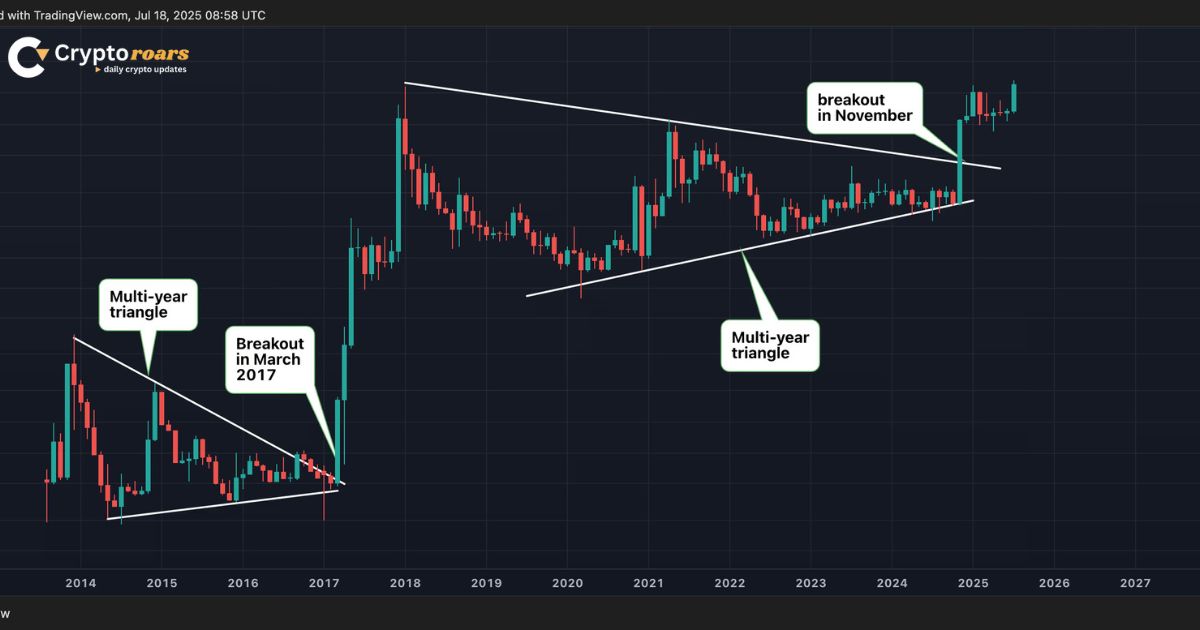
    Dogecoin (Complete Guide & Price Prediction)

    0
    Dogecoin

    When you hear the word Dogecoin (DOGE), you probably think of a joke coin that turned into a global sensation. At first, this parody cryptocurrency was meant to poke fun at the hype around Bitcoin (BTC) and Litecoin (LTC). But over the years, the Shiba Inu meme coin has built an identity that goes far beyond humor. It became part of internet culture, a meme-driven crypto that surprisingly holds billions in value and a passionate following called the crypto community (Doge Army).

    This guide explains everything you need to know about coin—its origins, how it works, how to buy and mine it, the risks involved, and where experts see its future. Whether you’re a beginner or an experienced trader, by the end of this article, you’ll understand why this cult status cryptocurrency refuses to fade away.

    What is Dogecoin?

    Dogecoin is a peer-to-peer cryptocurrency that runs on an open-source blockchain. Unlike many other digital assets, Dogecoin doesn’t try to position itself as the most advanced or revolutionary project. Instead, it’s a simple payment coin that is cheap to send, fun to use, and backed by an extremely loyal community.

    One thing that sets Dogecoin apart is its infinite coin supply. Unlike Bitcoin, which has a cap of 21 million coins, Dogecoin keeps producing new coins forever through mining. Each block adds 10,000 DOGE per block to the Dogecoin circulating supply (131.28 billion) and counting. That makes Dogecoin an inflationary cryptocurrency, but it also ensures there will always be enough supply for spending and tipping online.

    The History 

    Dogecoin was created in 2013 by IBM & Adobe engineers (Billy Markus, Jackson Palmer). They forked the Litecoin codebase and replaced the branding with the famous Shiba Inu meme coin from the “Doge” meme. The goal was never to compete with Bitcoin (BTC) but to build a fun and welcoming crypto for beginners.

    Despite its playful start, Dogecoin quickly gained traction. In 2014, it shocked the world when the crypto community (Doge Army) raised thousands in fundraising with Dogecoin to sponsor the Jamaican Bobsled Team sponsorship for the Winter Olympics, and later even a NASCAR sponsorship (Josh Wise). These events cemented Dogecoin’s reputation as a people’s coin—used for charity, tips, and internet fun.

    Key Features 

    Dogecoin might seem simple, but its features make it different from other coins. For starters, Dogecoin uses the proof-of-work protocol with the Scrypt algorithm. That makes it faster and less energy-intensive than Bitcoin mining. Its block confirmation time (1 minute vs Bitcoin’s 10 minutes) allows for quick transactions, which is a big reason people love using it for micro-payments.

    Another feature is Dogecoin’s strong decentralized network of Dogecoin network nodes and miners. While it’s often seen as lighthearted, the infrastructure is robust, securing the blockchain ledger system against the most common attacks. However, because of its relatively lower hash power distribution, there have been concerns about the potential 51% attack risk if a large mining pool gained control.

    How Does it Work?

    At its core, Dogecoin runs like other cryptocurrencies. Transactions are recorded on a decentralized ledger maintained by thousands of computers worldwide. Miners validate these transactions by solving math puzzles, using crypto mining hardware (CPU, GPU, ASIC).

    Dogecoin’s mining is merge-mined with Litecoin. This means miners can secure both blockchains at the same time, improving stability. The incentive to miners comes in the form of mining rewards, which are set at a fixed 10,000 DOGE per block. This ensures ongoing supply but also adds to price volatility in crypto markets.

    Feature Dogecoin (DOGE) Bitcoin (BTC) Litecoin (LTC)
    Block Time 1 minute 10 minutes 2.5 minutes
    Supply Unlimited (inflationary supply) 21 million capped 84 million capped
    Algorithm Scrypt algorithm SHA-256 Scrypt
    Current Supply 131.28 billion DOGE ~19 million BTC ~74 million LTC

    How to Buy Dogecoin

    If you’re in the USA, buying Dogecoin is as simple as opening an account on a popular cryptocurrency exchange. Platforms like Coinbase, Binance.US, and Kraken allow you to trade USD for DOGE. Many retail traders in America also purchase Dogecoin through Robinhood traders, who helped drive its 2021 surge.

    When buying, you’ll need a safe place to store your DOGE. This is where crypto wallets (hot & cold) come into play. A hot wallet is connected to the internet, making it convenient but less secure. A cold wallet is offline and protects your DOGE from hackers. Most serious investors use a combination of both crypto storage solutions (hot wallets, cold wallets) to stay safe.

    How to Mine it?

    Mining Dogecoin remains popular among enthusiasts. Unlike Bitcoin, where specialized ASICs dominate, Dogecoin can be mined using a wider range of crypto mining hardware (CPU, GPU, ASIC). Still, to be competitive today, you’ll need ASIC miners for Dogecoin.

    Most miners join Dogecoin mining pools like Multipool, Prohashing, Antpool, Nicehash, and Genesis Mining to combine computing power and share the mining rewards. Since Dogecoin uses the Scrypt algorithm, it allows for efficient mining alongside Litecoin. This merge-mining approach increases the hash power distribution and strengthens both blockchains.

    Dogecoin as an Investment

    Investing in Dogecoin comes with opportunities and risks. On one hand, it has a proven track record of gaining massive attention due to Elon Musk’s tweets and social media influence (Reddit, Twitter). On the other hand, its price volatility in crypto markets makes it unpredictable.

    Dogecoin reached its all-time high price ($0.7376) in May 2021, fueled by hype from WallStreetBets’ influence, retail investors, and Musk’s famous “to the moon” tweets. Those who bought early enjoyed massive ROI (Return on Investment), but those who bought at the top faced painful losses.

    Price Prediction (2025 & Beyond)

     Dogecoin

    Predicting Dogecoin’s future price is tricky, but analysts often consider adoption, supply, and community support. Some experts believe that Dogecoin could retest its previous highs if another bull market happens, especially if retail adoption of Dogecoin grows and it gains more use in payments.

    Others warn that its inflationary supply makes it hard for Dogecoin to hold long-term value compared to capped assets like Bitcoin. Still, its strong branding as the original meme-driven crypto and cult status cryptocurrency may allow it to keep surprising skeptics.

    Year Optimistic Prediction Conservative Prediction
    2025 $0.50 – $0.75 $0.15 – $0.25
    2030 $1.00+ $0.25 – $0.40

    Risks, Challenges & Regulations

    Dogecoin isn’t risk-free. As an inflationary cryptocurrency, the constant supply of 10,000 DOGE per block means dilution for holders. Combined with price volatility in crypto, it can be risky for those seeking stable returns.

    Regulation in the USA also adds uncertainty. The SEC has started paying closer attention to meme coins and platforms offering them. If stricter laws come, the risks of Dogecoin investment could rise, especially for smaller retail investors / Robinhood traders.

    Future of Dogecoin in the Crypto Market

     Dogecoin

    The big question is whether it has staying power. Many experts see it less as a competitor to Bitcoin and more as a cultural symbol. Its crypto tipping on Reddit and Twitter, history of sponsorships, and community-driven events prove that it thrives on engagement rather than scarcity.

    Its future may depend on whether businesses adopt it. If retail adoption of Dogecoin continues and more merchants accept it, DOGE could shift from being a parody cryptocurrency to a practical digital cash system on a decentralized network.

    Final Thoughts

    Dogecoin started as a joke but became one of the most recognized cryptocurrencies in the world. From Jamaican Bobsled Team sponsorship to Elon Musk’s “to the moon” tweets, its journey has been nothing short of extraordinary. While it may never rival Bitcoin in scarcity or Ethereum in technology, Dogecoin has carved out its lane as the internet’s favorite coin.

    If you decide to buy, mine, or trade Dogecoin, remember the risks. But also remember its unique power—the ability to bring people together in ways few other coins can. That’s why the crypto community (Doge Army) continues to say with pride: Dogecoin isn’t just money, it’s culture.

    FAQs 

    1. Is Dogecoin a good investment for beginners?

      Dogecoin can be an entry point for beginners because it’s cheap and widely available on cryptocurrency exchanges. However, like any meme-driven crypto, its price volatility in crypto markets means you should only invest what you can afford to lose.

    2. Can Dogecoin reach $1 again?

      Dogecoin once touched its all-time high price ($0.7376) in 2021. Whether it hits $1 depends on Elon Musk’s tweets, community adoption, and overall market capitalization of Dogecoin. Experts believe it’s possible but not guaranteed.

    3. How do I store Dogecoin safely?

      You can store Dogecoin in crypto wallets (hot & cold). Hot wallets are convenient for frequent use, while cold wallets provide stronger security against hacks.

    4. Is Dogecoin mining still profitable in 2025?

      Mining Dogecoin is possible using ASIC miners for Dogecoin or GPUs with the Scrypt algorithm. Profitability depends on hash power distribution, electricity costs, and the Dogecoin mining pools you join.

    5. Why is Dogecoin called the Shiba Inu meme coin?

      Dogecoin started as a parody cryptocurrency inspired by the famous Shiba Inu meme coin image. Its fun origins helped it gain a cult status cryptocurrency reputation in the crypto community (Doge Army).

    6. What makes it different from Bitcoin?

      Dogecoin uses a proof-of-work protocol but has a block confirmation time (1 minute vs Bitcoin’s 10 minutes) and an inflationary supply (10,000 DOGE per block). Unlike Bitcoin (BTC), Dogecoin has no maximum limit, making it an inflationary cryptocurrency.


      For more information, keep visiting cryptoroars.com
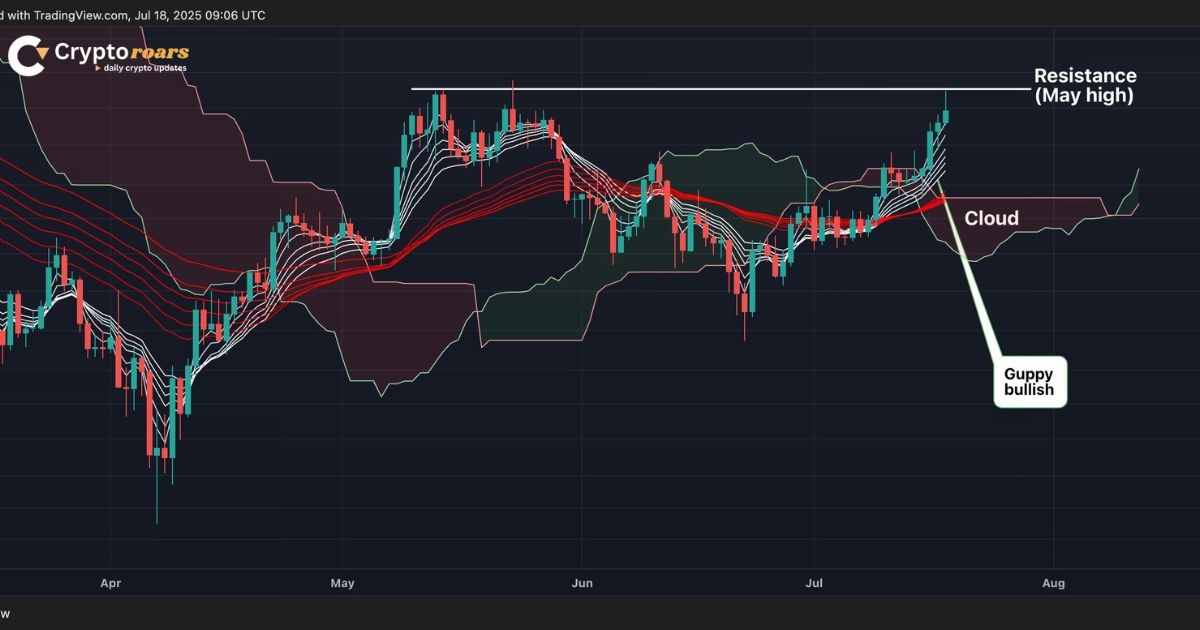
    XRP Coinbase Surge: What It Means for the Market

    0
    XRP Coinbase Surge

    Introduction to XRP and Its Market Position

    The unexpected XRP Coinbase surge has become a hot topic in the crypto space, drawing attention from seasoned traders, institutional investors, and everyday enthusiasts across the U.S. After enduring long periods of regulatory uncertainty linked to the Ripple lawsuit with the SEC, XRP is once again proving its resilience in the digital asset market. The rise in spot trading activity on Coinbase (Nasdaq: COIN) signals renewed confidence, especially as massive whale accumulation continues to shake up liquidity levels. This surge is not just about quick gains; it reflects deeper shifts in how investors perceive XRP’s role in global finance and digital payments.

    What sets this momentum apart is the growing influence of XRP derivatives trading and the broader XRP expansion in the U.S. market. With the launch of XRP perpetual futures on the Coinbase derivatives platform, traders are tapping into new opportunities to profit from volatility. These developments show how exchange moves, whale strategies, and regulatory clarity can converge to reshape the entire crypto landscape.

    Recent XRP Whale Accumulation and Billion-Dollar Moves

    The most striking factor behind the XRP Coinbase surge is the sudden whale accumulation. Blockchain data shows that billions of dollars worth of XRP have been accumulated by large wallets, indicating renewed confidence. These whale moves are often considered market signals, and in this case, the accumulation comes alongside an increase in XRP derivatives trading and XRP perpetual futures demand.

    Whale behavior matters because it often precedes major price movements. For example, a 2023 analysis by Bitwise Asset Management highlighted how large investors strategically bought XRP before a rally. Similarly, today’s XRP Coinbase surge could be the start of another bullish cycle. Ryan Rasmussen, an industry analyst, explained that whale buying often creates upward pressure, especially when combined with strong spot trading activity on Coinbase Derivatives and other platforms.

    Whale Activity Trend Impact on XRP Price Market Sentiment
    Accumulation over $1B Upward pressure Bullish
    Transfers to Coinbase wallets Mixed Neutral to Bullish
    Sudden liquidation Downward pressure Bearish

    Why Coinbase Reduced XRP Holdings by 57.4%

    Interestingly, at the same time whales were accumulating, Coinbase (Nasdaq: COIN) reduced its XRP holdings by 57.4%. According to the Coinbase earnings report and the company’s Form 10-Q filing, this reduction was part of liquidity management and risk balancing. Some analysts suggest this was not a bearish move but a strategic reallocation to prepare for higher XRP derivatives trading volume.

    This action has two possible interpretations for U.S. investors. On one hand, it could signal caution, suggesting Coinbase wants to avoid overexposure. On the other hand, the reduction might have been necessary to support XRP relisting on Coinbase with greater liquidity flexibility. The timing, aligned with whale buying, suggests the second interpretation may hold more weight.

    XRP Transfers to Coinbase: Sell Pressure or Strategic Moves?

    XRP Coinbase Surge

    Massive XRP transfers into Coinbase wallets are another driver behind the XRP Coinbase surge. At first glance, such transfers might look like sell pressure, as traders often deposit to exchanges to sell. However, case studies in previous cycles show this is not always true. In many cases, whales use exchange wallets for strategic positioning in futures, staking, or large over-the-counter transactions.

    For example, in early 2024, a similar transfer wave preceded a rally when Coinbase Derivatives expanded U.S.-regulated crypto futures offerings. Today, the rise of BTC, ETH, SOL, XRP futures suggests that transfers could be related to perpetual futures demand. The broader crypto derivatives market is growing in the U.S., and XRP is becoming a big part of it.

    Impact of Whale Activity on XRP Price Trends

    The XRP Coinbase surge shows how whale activity shapes price direction. Large buy-ins create strong XRP bullish momentum, which in turn attracts U.S. investors looking to follow the trend. Past data reveals a pattern: when whales accumulate heavily, XRP tends to outperform in the weeks that follow.

    Another factor is psychology. When traders see billion-dollar whale movements, it signals confidence. This effect magnifies in the U.S. market where Coinbase Derivatives and spot trading activity data are publicly tracked. Whales do not always guarantee rallies, but in the case of XRP, the combination of accumulation, regulatory clarity, and increased institutional adoption of XRP sets the stage for sustainable growth.

    XRP Open Interest Surge and Derivatives Market Influence

    The rise in XRP open interest to over $3 billion has made headlines. Much of this comes from the growing Coinbase derivatives platform. Traders are increasingly using 24/7 futures trading options like XRP perpetual futures and Nano XRP futures to leverage short-term moves.

    This surge shows how XRP is no longer just about payments but is now a core part of the crypto derivatives market. By offering these futures, Coinbase Derivatives has placed XRP alongside BTC, ETH, SOL, which are usually seen as the main futures assets. The XRP Coinbase surge is, therefore, as much about derivatives as it is about spot buying.

    How Coinbase’s Role Shapes XRP Liquidity and Demand

    Coinbase (Nasdaq: COIN) plays a key role in XRP’s U.S. liquidity. While global exchanges like Binance and Bitstamp also support XRP, U.S. investors rely heavily on Coinbase due to its regulated environment. The XRP Coinbase surge shows how listings and liquidity on a single platform can impact overall demand.

    The Coinbase earnings report and shareholder letter (Q2 2025) also highlighted the importance of XRP in trading volumes. XRP’s contribution to Coinbase trading revenue has grown significantly after the XRP relisting on Coinbase. This relisting, combined with access to XRP derivatives trading, makes Coinbase a central hub for XRP liquidity in the U.S.

    XRP vs Ethereum: Shifts in Trading Volume and Investor Focus

    For the first time, XRP has challenged Ethereum (ETH) in XRP vs Ethereum trading volume on Coinbase. This shift shows a deeper XRP expansion in the U.S. market and reveals changing investor sentiment.

    One reason is cost efficiency. Ethereum (ETH) has struggled with high gas fees, while XRP (Ripple) offers faster and cheaper transactions. Combined with regulatory clarity for XRP, this creates a strong narrative for U.S. adoption. Analysts point to the XRP Coinbase surge as evidence that investor focus is gradually shifting, at least in the short term, from ETH toward XRP.

    Regulatory Factors and SEC Influence on XRP Trading

    No story about XRP is complete without discussing the Ripple lawsuit with the SEC. The case dragged on for years, creating uncertainty for U.S. investors and exchanges. The Federal court ruling (XRP not a security) changed everything, providing regulatory clarity for XRP and opening the door for XRP relisting on Coinbase.

    This clarity is why the XRP Coinbase surge is so powerful. Unlike many other tokens that still face uncertainty, XRP has a degree of legal backing in the United States. As a result, institutional players are more willing to invest. Some analysts even believe this ruling could inspire new institutional adoption of XRP across banks and payment providers.

    Future Outlook: Can Whale Accumulation Push XRP to New Highs?

    XRP Coinbase Surge

    The big question for traders is whether the XRP Coinbase surge can push prices to new highs. Analysts predict that continued whale accumulation, combined with the growth of XRP perpetual futures and Coinbase Derivatives, could keep momentum strong.

    However, the market is not without risks. If whales suddenly liquidate or if new regulatory actions appear, the trend could weaken. Still, the fundamentals look stronger than in past years. With more spot trading activity, deeper liquidity on Coinbase, and growing interest from institutional adoption of XRP, the path forward looks optimistic.

    Conclusion: What Traders Should Watch in XRP’s Next Move

    The XRP Coinbase surge reflects more than just a price rally. It shows how whale accumulation, Coinbase derivatives platform growth, and the Federal court ruling (XRP not a security) are reshaping the U.S. crypto landscape. U.S. investors should carefully watch whale wallet activity, XRP trading revenue, and upcoming updates in the Coinbase earnings report.

    XRP’s unique mix of speed, efficiency, and legal clarity makes it one of the strongest contenders for institutional adoption in the American market. Whether through spot trading activity, XRP derivatives trading, or cross-border payment solutions, XRP is securing its place among the top digital assets. The coming months will reveal whether this XRP Coinbase surge was just the beginning of a larger move toward new highs.

    FAQs about the XRP coinbase surge

    What does the XRP Coinbase surge mean?

    It refers to a sudden rise in XRP trading activity and price movements linked to Coinbase (Nasdaq: COIN), driven by whales, retail investors, or new listings.

    Why did Coinbase reduce its XRP holdings?

    According to the Coinbase earnings report and Form 10-Q filing, the exchange cut its holdings by 57.4% to rebalance liquidity and manage XRP trading revenue.

    How do whale moves impact XRP price?

    Large whale transfers to Coinbase Derivatives or spot markets can increase sell pressure or trigger XRP bullish momentum, depending on timing and volume.

    Is XRP relisting on Coinbase possible again?

    Yes, after the federal court ruling (XRP not a security), many analysts expect more support for XRP expansion in the U.S. market and potential relisting moves.

    What role does the SEC play in XRP trading?

    The SEC (U.S. Securities and Exchange Commission) still influences market confidence due to the Ripple lawsuit with the SEC, but recent wins gave XRP more regulatory clarity.

    Can XRP whales push the price higher in 2025?

    Yes, if institutional adoption of XRP and cross-border payments with XRP grow, whale accumulation plus XRP derivatives trading could create strong bullish trends.

    For more information, keep visiting cryptoroars.com